
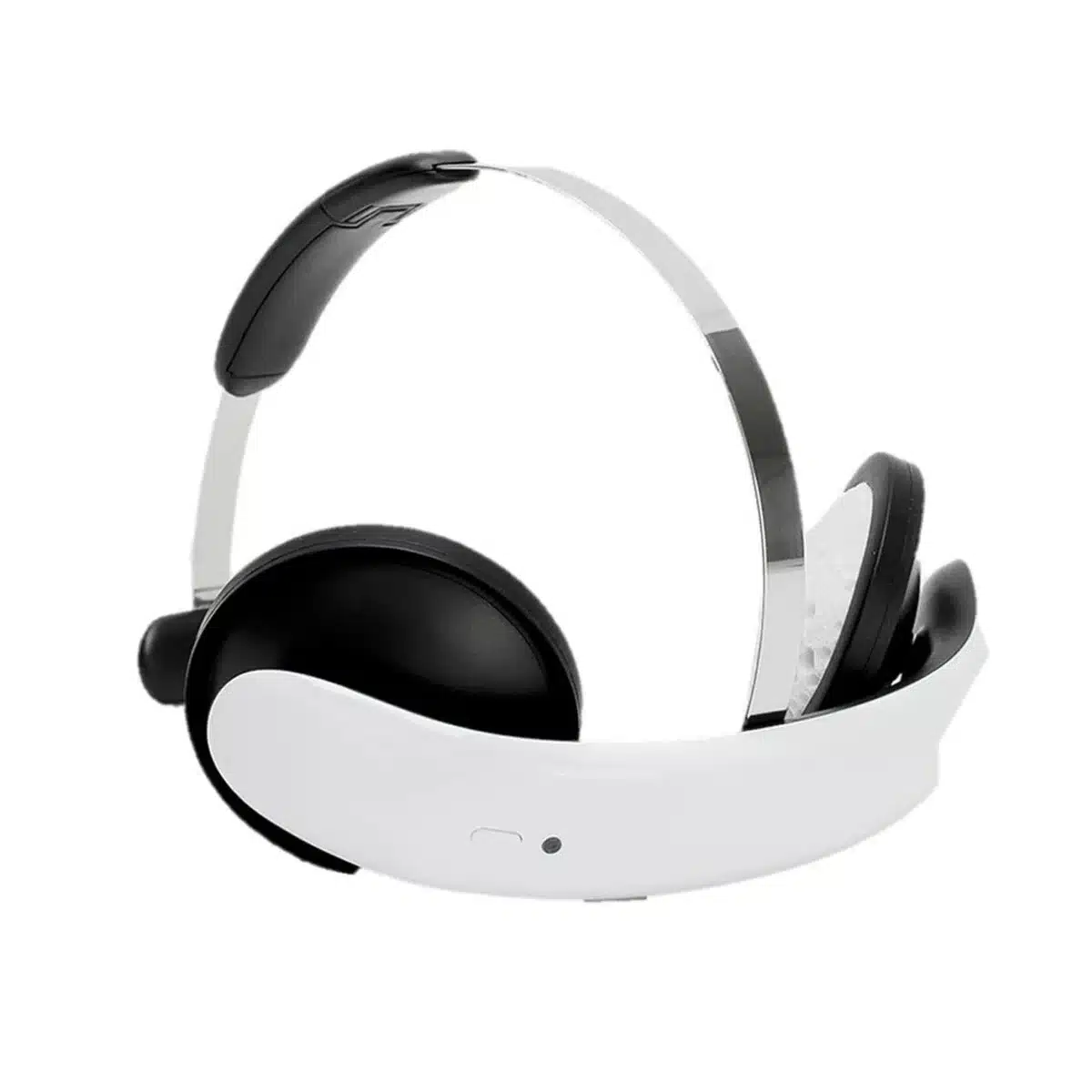
⚕️ Medical Disclaimer: This article is for informational and educational purposes only and does not constitute medical advice. Flow FL-100 is an FDA-approved prescription medical device. A prescription from a licensed healthcare provider is required to purchase it in the US. Always consult a qualified healthcare provider before using any device for depression, anxiety, or any mental health condition.
In December 2025, something unprecedented happened in the mental health device space: the FDA approved the first-ever at-home brain stimulation device for the treatment of depression. The device is called Flow FL-100, made by Swedish company Flow Neuroscience — and it represents a watershed moment for non-pharmaceutical mental health treatment in the United States.
Flow FL-100 is not a wellness gadget. It’s a legitimately FDA-approved medical device, backed by a randomized controlled trial published in Nature Medicine, used by over 55,000 patients in Europe and the UK, deployed across NHS services, and now cleared for US prescription use. It is launching in Q2 2026, priced between $500 and $800. This review covers everything you need to know — the technology, the evidence, the honest limitations, and how it compares to other devices in this series.
🔬 What Is Flow Neuroscience and How Does It Work?
Flow uses tDCS — transcranial Direct Current Stimulation — a non-invasive brain stimulation technology that has been researched for over 25 years. The headset delivers a gentle 2mA electrical current to the dorsolateral prefrontal cortex (DLPFC) — the brain region responsible for mood regulation, emotional processing, and cognitive control — through electrodes on the scalp. Sessions last 30 minutes and are done at home, once or twice daily, over a 10–12 week treatment course.
The mechanism: the DLPFC is consistently underactive in depression. tDCS delivers a weak, direct electrical current that increases neuronal excitability in the targeted region, promoting neuroplasticity and improving connectivity between mood-regulating brain networks. Unlike CES devices (Alpha-Stim, Fisher Wallace) which deliver alternating current through the earclips or temples, tDCS uses direct current applied directly over specific brain regions through scalp electrodes — giving more targeted regional stimulation.
The Flow treatment is paired with a companion app that delivers cognitive behavioral therapy (CBT) exercises during and between sessions — a combination that research shows significantly outperforms tDCS alone or CBT alone.
Background reading: Wearable Anxiety Devices — All Options Compared
🏆 The FDA Approval — Why It Matters
The FDA approved Flow FL-100 on December 11, 2025 — making it the first prescription at-home brain stimulation device approved in the US for the treatment of moderate to severe major depressive disorder (MDD). This is not FDA clearance (the lesser standard that Alpha-Stim and Fisher Wallace carry) — this is full FDA approval, the same rigorous standard applied to prescription drugs, based on a multisite, double-blind, placebo-controlled randomized superiority trial.
In July 2022, Flow also received the FDA Breakthrough Device Designation — the first medical device in the tDCS category to achieve this status, reflecting the FDA’s assessment that it offers significant advantages over existing approved alternatives.
It is cleared for adults 18+ with moderate to severe MDD, as a standalone treatment or alongside other treatments, in patients who are not considered treatment-refractory to medication. Prescription required.
📊 The Clinical Evidence
📄 The Pivotal RCT — Published in Nature Medicine
The FDA approval was based on the Empower Study — the largest US/UK tDCS trial for depression ever conducted, with 173–174 participants across multiple sites at the University of Texas and University of East London. Results at 10 weeks:
- ✅ 58% of patients achieved remission (MADRS score below 10 — no longer clinically depressed)
- 📈 62% had a clinical response (more than 50% improvement in depressive symptoms)
- 🔄 Twice as effective as commonly prescribed antidepressants in head-to-head comparisons
- ⚠️ Side effects mild and transient — mild skin redness or tingling at electrode sites; 4.5% self-reported side effect rate across 40,000+ real-world users; no serious adverse events
🏥 NHS Real-World Data
Flow is already deployed across NHS primary care, community mental health, perinatal mental health, and crisis services in the UK. Northamptonshire Health Foundations Trust has published three papers endorsing its use. In a crisis care evaluation, Flow use was associated with a 75% reduction in reported suicidal ideation and avoided psychiatric hospital admissions — a finding with profound implications for mental health system capacity. Among 55,000+ real-world global users, 77% reported symptom improvement within three weeks.
😰 Anxiety
Flow is not currently approved for anxiety as a standalone condition — it’s approved for depression. However, anxiety and depression share overlapping prefrontal pathways, and research shows approximately two-thirds of Flow users experience improvements in anxiety symptoms alongside depression relief. The largest home-based tDCS trial demonstrated significant improvements in both depression and anxiety. Future research into anxiety, PTSD, and traumatic brain injury is planned.
Background reading: How to Sleep Longer: 12 Science-Backed Techniques
🆚 Flow vs Alpha-Stim and Fisher Wallace
All three are FDA-regulated neurostimulation devices for mental health — but they differ significantly:
- ⚡ Technology: Flow uses tDCS (direct current, scalp electrodes, targeted to DLPFC). Alpha-Stim and Fisher Wallace use CES (alternating current, earclips or temples, broader brain stimulation)
- 📋 Regulatory status: Flow has full FDA approval (drug-standard evidence). Alpha-Stim and Fisher Wallace have FDA clearance (lower evidentiary standard)
- 🎯 Primary indication: Flow — depression. Alpha-Stim — anxiety and insomnia. Fisher Wallace — depression, anxiety, and insomnia
- 💊 App integration: Flow pairs tDCS with CBT app exercises — a key differentiator; Alpha-Stim and Fisher Wallace are standalone hardware
- 💰 Price: Flow $500–$800 (launching Q2 2026). Alpha-Stim $795. Fisher Wallace $599
✅ What Flow Neuroscience Does Well
- 🏆 Full FDA approval — the first and only at-home brain stimulation device with this status in the US; the highest regulatory bar of any device in this review series
- 📄 RCT published in Nature Medicine — one of the most prestigious scientific journals in the world; gold-standard evidence
- 🏥 NHS-deployed at scale — 55,000+ real-world users; proven in clinical settings beyond trials
- 💊 Combined tDCS + CBT — the app integration is clinically meaningful; outcomes are significantly better than either intervention alone
- 📉 Twice as effective as antidepressants in head-to-head comparisons — a remarkable finding
- 🚀 Crisis care data — 75% reduction in suicidal ideation in real-world deployment is a genuinely landmark finding
- 🩺 Insurance coverage coming — CEO confirmed negotiations with payers; coverage may eventually make this cost-accessible
❌ The Honest Downsides
- ⏳ Not yet available in the US — as of mid-2026, the device is approved but still launching; availability expected Q2 2026; check flowneuroscience.us for updates
- 📋 Prescription required in the US — cannot purchase directly; requires a healthcare provider
- 🎯 Indicated for depression, not standalone anxiety — if anxiety without depression is your primary concern, Alpha-Stim or Fisher Wallace are more directly applicable
- ⏱️ Requires daily 30-minute sessions for 10–12 weeks — a meaningful time commitment; not a passive or on-demand tool
- 🔌 Electrode setup required — sponge electrodes must be adequately moistened before each session; two reports of mild electrical burns from insufficient moistening in trials (both resolved without scarring)
- 💊 App dependency — the device works best when paired consistently with the companion CBT app; this adds meaningful clinical benefit but does require daily engagement beyond just wearing the headset
- 💰 Insurance coverage unconfirmed — $500–$800 out of pocket if not covered; insurance negotiations ongoing as of launch
👤 Who Is Flow Neuroscience Best For?
- People with moderate to severe depression — the primary indicated use; this is the most rigorously validated drug-free at-home depression treatment available
- Those who have not responded fully to antidepressants or want to reduce medication dependence under medical supervision
- Depression with anxiety — two-thirds of users experience anxiety relief alongside depression improvement
- People who want the highest possible evidentiary standard — full FDA approval, Nature Medicine RCT, NHS deployment
- Those who can commit to a 10–12 week structured daily program
💲 Pricing and How to Get It
- 📦 Flow FL-100: $500–$800 (US launch pricing) — visit flowneuroscience.us
- 📋 Prescription required in the US — sign up via the Flow website for clinician referral or bring to your own doctor
- 🏥 Insurance coverage: negotiations underway; may be covered for eligible patients
- 🌍 Available now in UK and EU without prescription at approximately $500/€450
- ⏱️ Treatment course: 30 minutes daily for 10–12 weeks
⭐ StopAnxiety.org Verdict
Flow Neuroscience is the most significant device in this entire review series from a clinical and regulatory standpoint. Full FDA approval — the highest bar in US medicine — backed by a Nature Medicine RCT, 55,000+ real-world users, NHS deployment, and 58% remission in depression at 10 weeks. These are not wellness device statistics. This is legitimate medical evidence at pharmaceutical-trial standards.
It rates below Alpha-Stim in this series primarily because it’s a depression-specific device not yet widely available in the US, and because anxiety without depression falls outside its approved indication. For depression specifically — and for depression with anxiety — nothing in this review series comes close to its evidence base. When insurance coverage is established and US availability is confirmed, it may become the first genuinely mainstream alternative to antidepressants for appropriate patients.
Rating: 4.9 / 5 — The highest-evidence device in this entire review series. Full FDA approval, Nature Medicine RCT, NHS deployment, 58% remission rate, and crisis care data showing 75% reduction in suicidal ideation. Docked for depression-specific indication (not yet approved for standalone anxiety), US availability still rolling out, and the 10–12 week daily commitment required. For depression specifically, this is the gold standard of home neuromodulation.
❓ How to Get Flow FL-100: Your Questions Answered
Getting access to Flow FL-100 involves a few steps. Here’s what you need to know before you start.
🩺 Do I need to see a psychiatrist to get a prescription?
Not necessarily. Any licensed healthcare provider — including your primary care physician, a nurse practitioner, or a psychiatrist — can technically prescribe the FL-100. However, because the device is indicated for moderate to severe MDD (assessed using clinical rating scales like the MADRS), a mental health professional is often the most direct route. Flow also maintains its own network of prescribing clinicians through its website, which is the easiest path for most people.
💻 Can I get a prescription through Flow’s website?
Yes — Flow’s website connects patients with prescribing clinicians who are already enrolled in their monitoring platform. This is the recommended first step for most people because the prescriber will be set up to receive your weekly MADRS-s self-report data through the app. You can start by visiting flowneuroscience.com and clicking “Get Started.”
💰 What does Flow FL-100 cost?
The US retail price is expected to be in the $500–$800 range as a one-time purchase — no monthly subscription fees. (In Europe, where it has been available since 2020, it sells for approximately €459 / ~$537.) Replacement electrode pads will be needed over time. Insurance coverage is still being negotiated, but the device is likely HSA- and FSA-eligible with a prescription, which can meaningfully reduce out-of-pocket cost. Flow’s website has the most current US pricing once it launches.
📱 What does the treatment routine actually look like?
The standard protocol is one 30-minute session per day, five days a week, for six weeks — then ongoing maintenance sessions as needed. Sessions are done at home through the Flow app, which guides electrode placement, runs the stimulation, and tracks your mood scores over time. Most people do it in the morning while reading or watching TV — you feel a mild tingling or warmth but it’s generally well tolerated.
⚠️ Is it safe to use with antidepressants?
In clinical trials, Flow FL-100 has been studied both as a standalone treatment and as an add-on to antidepressant medication. It is not intended for treatment-resistant depression (defined as failing two or more antidepressants), but it may be used alongside a first or second antidepressant trial. Always disclose all current medications and treatments to your prescribing clinician before starting.
🔁 What if I have anxiety, not depression?
The FL-100 is FDA-approved specifically for major depressive disorder — not anxiety as a standalone diagnosis. That said, depression and anxiety frequently co-occur, and improving depression often reduces anxiety symptoms as well. If your primary concern is anxiety, discuss this with your provider. The device is not approved as a first-line anxiety treatment, and this article is provided for educational context only.
Also on StopAnxiety.org:
- Alpha-Stim Review — FDA-Cleared CES for Anxiety and Insomnia
- Fisher Wallace Review — FDA-Cleared CES for Depression, Anxiety and Insomnia
- Nuropod Review — The Most Clinically Validated Consumer VNS Device
- Apollo Neuro Review — Does This Anxiety Wearable Actually Work?
- Wearable Anxiety Devices — All Options Compared
- Do Anti-Anxiety Devices Really Work? The Science
- Tools & Devices Hub — All Articles
Medical Disclaimer: This article is for educational purposes only and does not constitute medical advice. Flow FL-100 is an FDA-approved prescription device indicated for moderate to severe major depressive disorder in adults. It is not approved for standalone anxiety. Always consult a qualified healthcare provider before starting any new treatment. Individual results vary.
Looking for something specific?
Search all our science-backed articles on natural anxiety relief.


