⚕️ Medical Disclaimer: This article is for informational and educational purposes only and does not constitute medical advice. Pulsetto is a wellness device, not an FDA-cleared medical treatment. Always consult a qualified healthcare provider before using any device for anxiety, stress, or sleep disorders.
Pulsetto is the most commercially successful device in this review series — over 100,000 users, a 4.9/5 rating from more than 42,000 verified buyers, and an aggressive marketing presence across social media. It’s also the most controversial. Independent reviewers have flagged misleading marketing claims, and the device-specific clinical evidence is the thinnest of any device we’ve reviewed. That gap between popularity and proof is worth examining carefully before spending $269.
This review covers the good, the legitimate concerns, and the important distinctions between what vagus nerve stimulation as a category has demonstrated and what Pulsetto specifically has proven.
🔬 What Is Pulsetto and How Does It Work?
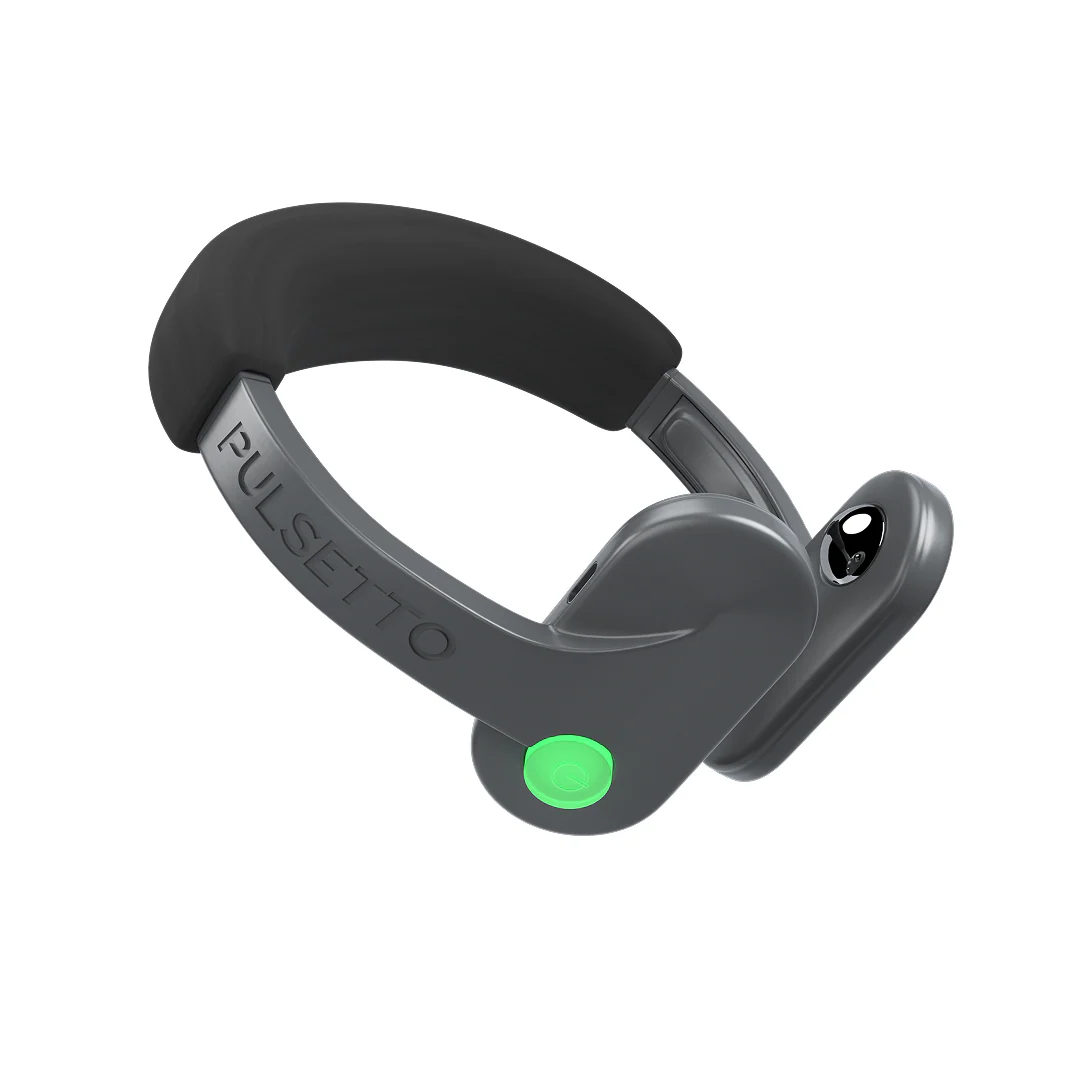
Pulsetto is a transcutaneous cervical vagus nerve stimulator (tcVNS) — a wearable collar-style device that delivers mild electrical impulses through the skin of the neck to the cervical vagus nerve. Made by a Lithuanian company, it connects via Bluetooth to a companion app. Sessions run just 4–6 minutes — significantly shorter than most competitors — which is a genuine practical advantage for busy users.
To use it: apply the included conductive gel to the electrode pads, position the collar approximately one inch below the ear on both sides of the neck, select a program in the app, and set your intensity. The sensation is typically described as a gentle buzz or light muscle twitch — not painful at recommended settings.
There are five programs:
- 😌 Stress — acute stress relief
- 🧘 Relaxation — general parasympathetic activation
- 😴 Sleep — pre-bed wind-down
- 🔋 Burnout — recovery from sustained stress and fatigue
- 💊 General discomfort — mild pain and tension relief
Two models: Pulsetto Lite (~$224 on promotion) and Pulsetto FIT (~$269) — the FIT adds adjustable padding for smaller necks and a wave-like stimulation pattern with slightly longer battery life.
Background reading: Wearable Anxiety Devices — All Options Compared
📊 The Evidence — A Three-Layer Honest Assessment
Understanding Pulsetto’s evidence requires separating three distinct layers that the company’s marketing often blurs together.
Layer 1: VNS Category Evidence (Strong)
Vagus nerve stimulation as a therapeutic approach has a solid scientific foundation. Implanted VNS devices have decades of clinical use and FDA clearance for epilepsy and treatment-resistant depression. Transcutaneous VNS research is growing fast: a 2025 RCT of 70 participants found tVNS significantly reduced anxiety and perceived stress vs sham; a separate 2025 RCT found four weeks of VNS reduced anxiety, stress, and depression in athletes; and a 2025 systematic review linked tVNS to meaningful sleep quality improvements. The mechanism is real and well-supported.
Layer 2: Cervical vs Auricular VNS (Important Distinction)
Most of the strongest tVNS research uses auricular (ear-based) stimulation, not cervical (neck-based). Pulsetto uses cervical tVNS. Both are valid approaches, but the evidence base for auricular tVNS is more developed. This doesn’t mean cervical VNS doesn’t work — it means the evidence Pulsetto borrows from the category is not a perfect match for its specific delivery method.
Layer 3: Pulsetto-Specific Evidence (Thin)
This is the critical gap. Pulsetto’s device-specific evidence consists of a 2025 peer-reviewed pilot study finding increased alpha-wave brain activity and lower blood pressure vs sham after a single use, and a small Zenodo pilot with self-reported wellbeing improvements. No large-scale, independently funded, peer-reviewed controlled trials of Pulsetto specifically exist yet.
More concerning: Wikipedia’s entry on non-invasive VNS devices notes that independent reviewers have reported Pulsetto used imagery from unrelated scientific studies in its marketing materials — described as misleading. This doesn’t mean the device doesn’t work, but it warrants healthy skepticism about marketing claims specifically. Contrast this with Alpha-Stim (100+ controlled studies, FDA-cleared) or Apollo Neuro (double-blind RCT).
Background reading: Do Anti-Anxiety Devices Really Work? The Science Explained
✅ What Pulsetto Gets Right
- ⏱️ 4–6 minute sessions — shortest of any device in this series; a real advantage for busy schedules
- 📱 No subscription required — core app features are free; no ongoing costs beyond gel replacements
- 💰 Accessible pricing — frequently $224–$269 on promotion; check the website before paying full price
- 📈 Massive user satisfaction — 4.9/5 from 42,000+ verified buyers and 86% satisfaction across 100,000+ users is genuinely hard to dismiss
- 🌐 Bilateral stimulation — stimulates both sides of the neck simultaneously, which some researchers consider advantageous
- ⚡ Acute stress use case — a 4-minute session at your desk when stress spikes is practical and realistic in a way longer sessions aren’t
❌ The Honest Downsides
- 🔬 Weakest device-specific evidence in this review series — no large-scale independent controlled trials; relies on tVNS category research that doesn’t perfectly match its delivery method
- ⚠️ Misleading marketing flagged by independent reviewers — use of unrelated scientific imagery noted; read all marketing claims critically
- 🧴 Requires conductive gel — roughly a one-month supply included; replacement must be purchased separately; slightly messy setup
- 📍 Placement learning curve — collar positioning is important for effectiveness; takes practice to get right consistently
- 🏷️ Confusing pricing — the “regular” price ($474–$582) appears rarely charged; the constant promotional pricing makes true value hard to assess
- ⏳ Short sessions may limit cumulative benefit — 4–6 minutes is convenient but may not produce the sustained autonomic shift that longer-session devices achieve
👤 Who Is Pulsetto Best For?
- People who want to try vagus nerve stimulation at the lowest commitment level — shorter sessions, lower price, no subscription
- Anyone with a busy schedule where 20–60 minute sessions aren’t realistic
- Those who want a device for acute in-the-moment stress — a quick 4-minute desk session when pressure spikes
- People comfortable making a wellness purchase based on user data rather than clinical proof
It is not ideal for people requiring clinical evidence before purchasing, those with diagnosed anxiety disorders needing evidence-based treatment, or anyone wanting the most rigorously validated option in the category.
💲 Pricing and What You Get
- 📦 Pulsetto Lite: ~$224 (promotional) — visit pulsetto.tech
- 📦 Pulsetto FIT: ~$269 (promotional) — adjustable fit, wave stimulation, longer battery
- 🧴 Conductive gel: included (~1 month supply); replacement available separately
- 📱 App: Free; no subscription required for core features
- ⚠️ Do not use if you have a pacemaker, implanted metal in the neck, epilepsy, or are pregnant
⭐ StopAnxiety.org Verdict
Pulsetto is the most accessible entry point into vagus nerve stimulation, and its user satisfaction numbers are genuinely impressive. The 4–6 minute sessions are a real-world advantage, and the no-subscription model is refreshingly clean.
But the evidence gap matters. If you’re buying Pulsetto, you’re buying on tVNS category evidence and user satisfaction data — not device-specific clinical proof. That’s acceptable for some buyers and not for others. Read the marketing critically, use promotional pricing, and approach it as a low-commitment wellness experiment rather than a validated clinical tool.
Rating: 3.7 / 5 — Useful for quick stress relief, lowest barrier to entry in the category, impressive user satisfaction. Held back by the weakest device-specific evidence in this series and marketing practices that warrant scrutiny. Worth trying at promotional pricing; harder to justify at full retail.
Also on StopAnxiety.org:
- Apollo Neuro Review — Does This Anxiety Wearable Actually Work?
- Alpha-Stim Review — The FDA-Cleared Device for Anxiety and Insomnia
- Sensate Review — Does This Vagus Nerve Device Actually Work?
- Wearable Anxiety Devices — All Options Compared
- Do Anti-Anxiety Devices Really Work? The Science
- Top Anti-Anxiety Supplements — Ranked by Evidence
- Tools & Devices Hub — All Articles
Medical Disclaimer: This article is for educational purposes only and does not constitute medical advice. Pulsetto is a wellness device and is not intended to diagnose, treat, cure, or prevent any disease or medical condition. Always consult a qualified healthcare provider before using any device for anxiety, stress, or sleep disorders. Individual results vary.
Looking for something specific?
Search all our science-backed articles on natural anxiety relief.