⚠️ Medical Disclaimer: This article is for informational purposes only and does not constitute medical advice. Always consult a qualified healthcare provider before starting any herbal supplement, especially if you take medications or have a medical condition. Herbs can interact with prescription drugs.
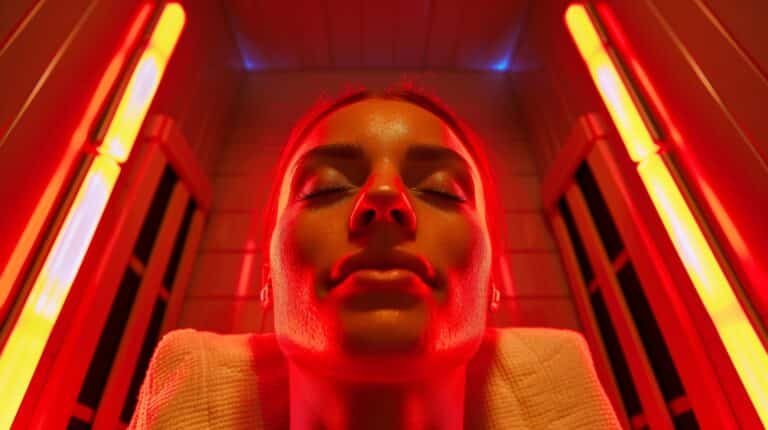
What if you could calm your anxious brain by shining a light on it? It sounds like science fiction — but transcranial photobiomodulation (tPBM), the clinical term for delivering red and near-infrared light to your skull, is one of the most fascinating emerging tools in mental health research. And the anxiety connection is more substantiated than most people realize.
Red light therapy has long been celebrated for healing skin, reducing inflammation, and speeding muscle recovery. But a quieter revolution is happening in neuroscience labs, where researchers are discovering that the same wavelengths of light that repair tissue can also reach your brain — reducing neuroinflammation, improving cerebral blood flow, lowering cortisol, and modulating the exact neurotransmitter systems that go haywire when anxiety takes hold.
This isn’t fringe science. We’re talking about peer-reviewed clinical trials, systematic reviews, and a 2024 meta-analysis confirming significant effects. The research is still maturing, but the mechanisms are real, the safety profile is excellent, and the practical applications are accessible — from clinical-grade panels to affordable at-home devices.
📋 What You’ll Learn
- Why red and near-infrared light can penetrate your skull and reach your brain
- The 5 biological pathways through which photobiomodulation reduces anxiety
- What clinical studies show — including an RCT specifically for generalized anxiety disorder
- The critical difference between red light (660nm) and near-infrared (810–850nm) for anxiety
- Exactly where to apply light, for how long, and how often
- How to stack red light therapy with other anxiety interventions for synergistic effects
- Device recommendations from entry-level to professional grade
💡 What Is Red Light Therapy (and What’s Photobiomodulation)?
Red light therapy uses specific wavelengths of light — typically in the red (630–700nm) and near-infrared (800–1100nm) range — to stimulate cellular processes at the mitochondrial level. When these wavelengths hit your cells, they’re absorbed by cytochrome c oxidase (CCO), the key enzyme in your mitochondria’s electron transport chain. This triggers a cascade: more ATP is produced, nitric oxide is released, oxidative stress decreases, and anti-inflammatory processes are activated.
Photobiomodulation (PBM) is the broader clinical term encompassing red light therapy, low-level laser therapy (LLLT), and near-infrared light therapy. For anxiety specifically, the most studied application is transcranial photobiomodulation (tPBM) — delivering light through the skull to directly influence brain tissue. The key insight: near-infrared wavelengths (810–850nm) can penetrate several centimeters of tissue, reaching the prefrontal cortex when applied to the forehead.
⚙️ The 5 Mechanisms Behind Red Light Therapy’s Anxiety Effects
🔥 1. Neuroinflammation Reduction
Chronic anxiety is strongly associated with neuroinflammation — elevated levels of pro-inflammatory cytokines like IL-6, TNF-α, and IL-1β in the brain. Studies demonstrate PBM suppresses these inflammatory cytokines by approximately 40% in depression and anxiety models, mediated through the mitochondrial pathway. This makes red light therapy particularly promising for anxiety with an inflammatory component — common in people with gut issues, chronic stress, poor sleep, or autoimmune conditions.
📉 2. Cortisol Regulation and HPA Axis Calming
The HPA axis is your body’s central stress-response system. In anxiety disorders, it’s chronically dysregulated — producing excess cortisol that keeps your nervous system in a state of hyperarousal. Infrared light therapy has been shown to lower elevated cortisol levels and trigger endorphin release even after a single session. For transcranial applications, light delivered to the prefrontal cortex appears to modulate top-down regulation of the HPA axis, helping restore the cortisol rhythm that anxiety disorders disrupt.
🩸 3. Cerebral Blood Flow and Oxygenation
One of PBM’s most consistently documented effects is improved cerebral blood flow via nitric oxide (NO) release. Studies show this improves prefrontal cortex oxygenation by roughly 25%. This matters enormously for anxiety because the prefrontal cortex, when well-oxygenated and active, exerts inhibitory control over the amygdala — the brain’s threat-detection center. Better PFC function means more effective top-down regulation of fear and worry responses.
🧠 4. Serotonin, Dopamine, and BDNF Modulation
PBM augments serotonin and dopamine synthesis pathways, with 20–30% symptom improvement in anxiety studies partly attributed to this mechanism. Perhaps more significant is PBM’s effect on Brain-Derived Neurotrophic Factor (BDNF) — the protein that promotes neurogenesis and supports hippocampal health. BDNF is consistently low in anxiety and depression. Studies show tPBM increases BDNF by approximately 30%, supporting the neural plasticity that allows anxious brains to rewire toward calmer baseline states.
😴 5. Sleep Improvement and Circadian Rhythm Regulation
Sleep deprivation dramatically worsens anxiety, and anxiety often destroys sleep quality — a vicious cycle. Red light therapy (specifically 630–660nm) positively influences melatonin production and sleep quality without the cortisol-spiking effects of blue light. When used in the evening, red light supports circadian signaling that promotes deeper, more restorative sleep — which in turn reduces next-day anxiety severity.
📊 What the Clinical Research Actually Shows
🎯 The Generalized Anxiety Disorder RCT
The most directly relevant study: a 2020 randomized controlled trial specifically targeting GAD used red light therapy applied to the forehead and chest once weekly for eight weeks in 40 patients. Results showed measurable reductions in anxiety symptoms compared to control — one of the few RCTs targeting anxiety directly rather than as a secondary outcome.
🔬 The tPBM Meta-Analysis (2024)
A 2024 systematic review and meta-analysis published in Frontiers in Psychiatry confirmed significant improvements across randomized controlled trials of photobiomodulation, with multiple studies documenting anxiety reduction. Researchers found that transcranial PBM at 810nm significantly decreased anxiety scores, with improvements sustained at both 2 and 4 weeks post-treatment.
🪖 PTSD and Trauma-Related Anxiety (2021)
An expert review examining near-infrared therapy for PTSD and depression in veterans found 25–35% symptom reduction — significant because PTSD represents one of the most treatment-resistant anxiety conditions, and even modest effects with a safe, non-pharmaceutical intervention represent meaningful clinical progress.
🏠 The 2025 Home-Based RCT
A 2025 RCT examined 810–1064nm near-infrared light therapy in 80 participants with mild-to-moderate anxiety in a home-based setting. Results showed a 28% decrease in HAM-A scores compared to sham treatment — with no adverse events. This study validates the at-home application model that makes PBM accessible to everyday anxiety sufferers.
Important caveat: The research is promising but still developing. Study sizes remain relatively small, protocols vary, and the optimal parameters for anxiety specifically are still being refined. Red light therapy should be considered an adjunctive tool that complements — not replaces — proven anxiety interventions.
🔴 Red vs. Near-Infrared: Which Wavelength for Anxiety?
🔴 Red Light (630–680nm)
- Penetration depth: 1–3mm (reaches skin and superficial tissue)
- Primary anxiety applications: sleep/melatonin support (evening use), mood effects via dermal pathways, systemic inflammation reduction
- Best used: evening wind-down, full-body panels for systemic effects
⚫ Near-Infrared (810–850nm)
- Penetration depth: several centimeters (reaches brain tissue transcranially)
- Primary anxiety applications: direct prefrontal cortex stimulation, HPA axis modulation, BDNF increases, cerebral blood flow improvement
- Best used: transcranial application (forehead/temples), daytime or early evening
For anxiety specifically, near-infrared is the primary workhorse. The 810nm wavelength has the most clinical evidence for transcranial applications. Devices combining both wavelengths provide the broadest benefit — red for systemic and sleep effects, NIR for transcranial brain effects.
🗓️ Red Light Therapy Protocol for Anxiety
📍 Application Sites
- 🧠 Primary: Forehead/Temples — The prefrontal cortex sits just behind your forehead. This is the primary target for anxiety applications, influencing top-down anxiety regulation, HPA axis activity, and amygdala dampening.
- 🔙 Secondary: Occipital Region (Back of Head) — Broader coverage including regions involved in relaxation responses and serotonin pathways.
- 💪 Full Body / Chest — Provides systemic benefits: whole-body inflammation reduction, cortisol modulation, and sleep improvement even without transcranial application.
⚙️ Session Parameters
- 📡 Wavelength: 810–850nm NIR (primary), 630–660nm red (supplementary)
- 📏 Distance from device: 6–12 inches for panels
- ⏱️ Session duration: 10–20 minutes per session
- 📅 Frequency: 3–5 sessions per week
- 🌅 Time of day: NIR transcranial in morning or early afternoon; red light sessions in evening for sleep support
- 📈 Expected timeline: Mood and sleep improvements within 2–4 weeks; meaningful anxiety reduction typically requires 6–12 weeks of consistent use
💡 Pulsed vs. Continuous Mode
For neurological and mood applications, research suggests pulsed settings (particularly 10Hz) may offer advantages over continuous wave for brain-targeted applications. If your device has a pulse mode, 10Hz is worth experimenting with for anxiety.
🛒 Device Recommendations
💰 Entry Level: Red Light Panel ($100–$300)
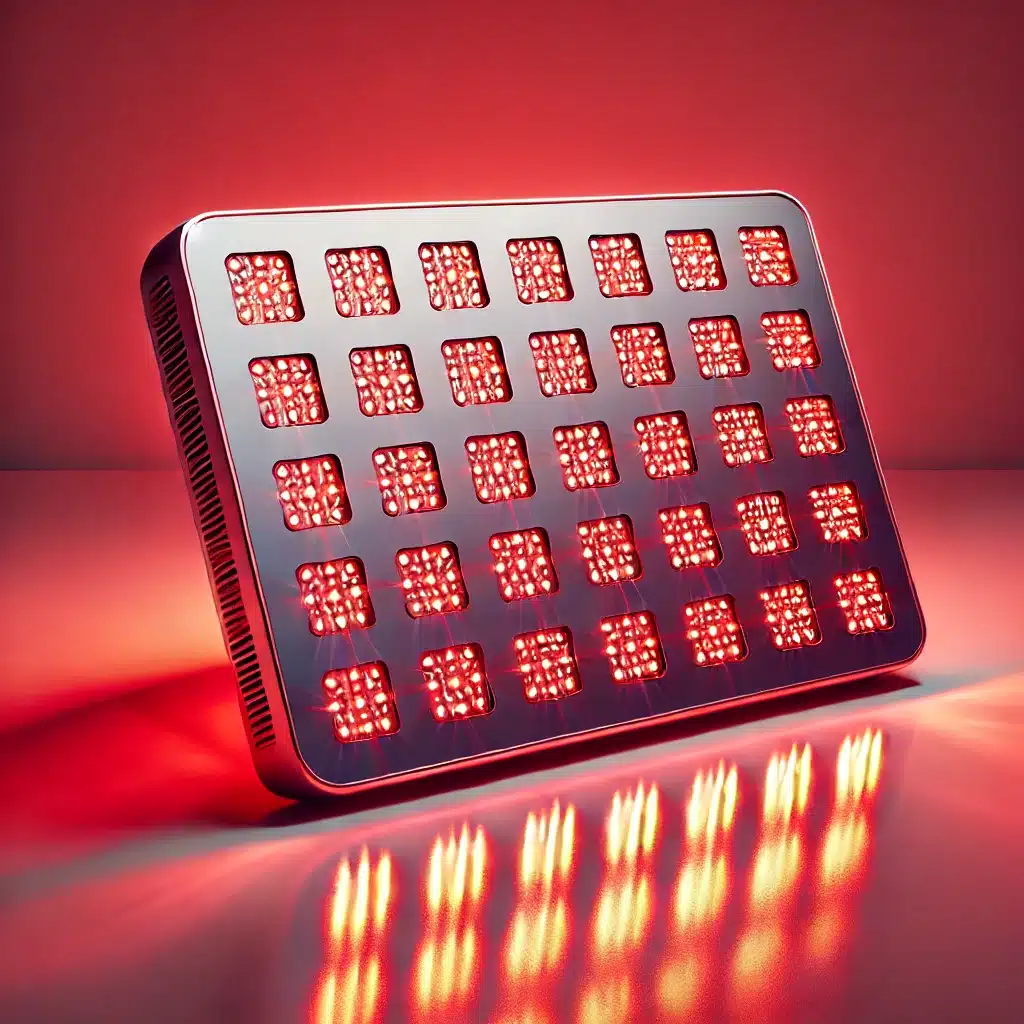
Devices like the Mito Red Light MitoMIN or Hooga HG300 provide red (660nm) and near-infrared (850nm) wavelengths in compact panel form. Look for verified wavelengths, irradiance of at least 50–100 mW/cm² at treatment distance, and third-party spectral analysis certificates.
🔆 Mid-Range: Full Panel ($300–$800)
Brands like Joovv, BioMax, and Mito Red Light offer higher-powered panels with both 660nm and 850nm wavelengths, larger treatment areas, and better build quality. Mito Red Light also offers the MitoMIND Helmet — a dedicated transcranial device with 256 LEDs at 810nm specifically designed for brain wellness applications.
🎯 Targeted Transcranial Devices ($200–$600)
Dedicated transcranial devices like the Vielight Neuro series were specifically designed for brain applications. The Vielight 810 and Neuro Gamma models have the most direct research backing and are the closest to research-grade tPBM devices available for home use. For a portable, wearable option, Recharge Health’s FlexBeam wraps around any body part — including the head — for targeted, hands-free sessions.
⚠️ Whatever device you use, ensure it explicitly lists irradiance specifications and wavelength verification. Many “red light therapy” products on Amazon use inadequate power output and do not produce therapeutic effects.
🔗 Stacking Red Light Therapy With Other Anxiety Interventions
- 💊 + Magnesium Glycinate: Both reduce neuroinflammation through complementary pathways. Magnesium regulates NMDA receptors; PBM reduces inflammatory cytokines.
- 🌿 + Ashwagandha: Both target the HPA axis and cortisol reduction — combining them may produce additive cortisol-lowering effects for stress-driven anxiety.
- 🐟 + Omega-3 (EPA/DHA): Omega-3s reduce neuroinflammation through resolvin and protectin pathways; PBM reduces it through cytokine suppression — independent, complementary mechanisms.
- 🫁 + Vagus Nerve Stimulation: Both tPBM and vagus nerve activation improve HRV and parasympathetic tone. A morning tPBM session followed by breathwork creates a powerful calming stack.
- 🌍 + Earthing/Grounding: Both reduce systemic inflammation through different mechanisms — passive, low-effort practices that compound over time.
⚠️ Who Should Be Cautious
- 💊 Photosensitizing medications: Some antibiotics (tetracyclines) and acne medications (isotretinoin) increase light sensitivity.
- 🎗️ Active cancer: Avoid directing light at known tumor sites.
- 🦋 Thyroid conditions: Avoid shining NIR directly on the thyroid gland.
- 🤰 Pregnancy: Insufficient data — avoid transcranial use during pregnancy.
- ⚡ Epilepsy: Pulsed light settings may be contraindicated. Use continuous mode only and consult a neurologist.
- 👁️ Eye safety: Never look directly at the light source. Use blackout goggles or keep eyes closed during sessions.
🗓️ Practical Getting-Started Protocol
- 🟢 Week 1–2 (Foundation): Start with 10 minutes of red + NIR panel positioned 12 inches from your forehead, 3x per week. Let your body acclimate without overdoing it.
- 🟡 Week 3–4 (Building): Increase to 15–20 minutes per session, 4–5x per week. Add an evening red-only session 1–2 hours before bed for sleep support.
- 🔵 Week 5–12 (Optimization): Maintain 4–5 sessions per week. Begin tracking anxiety levels, sleep quality, and morning HRV if you have a wearable. Most users notice clearest improvements in this phase.
- 🔄 Ongoing: 3–5 sessions per week as a maintenance protocol. Some users cycle (5 days on, 2 days off) to prevent receptor habituation.
✅ The Bottom Line
Red light therapy isn’t a cure for anxiety — but it’s one of the most scientifically credible biohacking tools for addressing anxiety’s underlying biology. The mechanisms are real: neuroinflammation reduction, HPA axis calming, improved cerebral blood flow, BDNF increases, and circadian rhythm support. The clinical evidence includes a GAD-specific RCT and multiple trials showing 25–35% anxiety symptom reduction.
What sets red light therapy apart in the anxiety toolkit is its mechanism breadth — it works on multiple systems simultaneously without the side effects of pharmaceuticals, the time commitment of therapy, or the complexity of other biohacking interventions. A 15-minute morning session targeting your forehead is genuinely passive and genuinely therapeutic.
For the most evidence-based approach: prioritize near-infrared (810nm) for transcranial application to the prefrontal cortex, use red light (660nm) in the evening for sleep support, and give it at least 8 weeks before evaluating results. 🔴
🎁 Want a personalized natural anxiety relief plan? Get our free guide covering the evidence-based tools, supplements, and daily habits that actually move the needle. Download it free here →
Looking for something specific?
Search all our science-backed articles on natural anxiety relief.