By the StopAnxiety.org Research Team | Last Updated: March 2026 | 11 min read
⚠️ Medical Disclaimer: The information in this article is for educational purposes only and is not intended as medical advice. Always consult a qualified healthcare provider before making changes to your health regimen, particularly if you have a diagnosed anxiety disorder or are currently taking medication. If you are experiencing a mental health emergency, please contact a mental health professional or call the 988 Suicide and Crisis Lifeline.
If you’ve spent any time in the world of natural health, biohacking, or anxiety relief recently, you’ve almost certainly heard the term “vagus nerve.” It’s showing up everywhere — from neuroscience podcasts to wellness blogs to clinical research journals. But what exactly is the vagus nerve? Why does it matter so much for anxiety? And most importantly — what can you actually do to activate it?
This article answers all of that. By the end you’ll understand why the vagus nerve may be the single most important piece of your nervous system when it comes to anxiety — and you’ll have a set of simple, evidence-based tools to start working with it today.
📋 What You’ll Learn
- What the vagus nerve is and what it does
- The connection between vagal tone and anxiety
- How to measure your vagal tone
- 7 proven ways to activate your vagus nerve naturally
- Vagus nerve stimulation devices — what the research says
🧠 What Is the Vagus Nerve?
The vagus nerve is the longest and most complex cranial nerve in the human body. The name comes from the Latin word for “wandering” — and it earns that name. Starting at the brainstem, it wanders downward through the neck, chest, and all the way into the abdomen, connecting the brain to the heart, lungs, stomach, intestines, and most major organs along the way.
It is the primary nerve of the parasympathetic nervous system — the branch responsible for your body’s “rest and digest” state, as opposed to the sympathetic nervous system’s “fight or flight” response.
Think of it this way: your sympathetic nervous system is the gas pedal — it revs up your stress response when you perceive a threat. Your vagus nerve is the brake pedal — it slows everything down, lowers your heart rate, reduces inflammation, and signals to your brain that you are safe.
When anxiety is chronically high, that brake pedal is often stuck. The vagus nerve isn’t doing its job effectively. Understanding why — and how to fix it — is at the heart of some of the most exciting anxiety research happening right now.
💪 Vagal Tone: The Key Concept You Need to Understand
Not all vagus nerves are created equal. The term vagal tone refers to the strength and efficiency of your vagus nerve activity. Think of it like muscle tone — some people have strong, responsive vagal tone and some have weak, sluggish vagal tone.
⬆️ High vagal tone is associated with:
- ✅ Lower anxiety and stress reactivity
- ✅ Better emotional regulation
- ✅ Stronger immune function
- ✅ Reduced inflammation
- ✅ Better heart health
- ✅ More resilience to life’s challenges
⬇️ Low vagal tone is associated with:
- ❌ Chronic anxiety and depression
- ❌ Poor stress recovery
- ❌ Increased inflammation
- ❌ Difficulty calming down after stress
- ❌ Sleep problems
- ❌ Digestive issues
💡 Here’s the critically important part: vagal tone is not fixed. It is trainable. Just like you can strengthen a muscle through exercise, you can strengthen your vagal tone through deliberate practices — and the research on how to do this is robust and growing rapidly.
🔬 The Vagus Nerve and Anxiety: What the Science Shows
The connection between vagal tone and anxiety is one of the most well-established relationships in modern neuroscience.
- 📊 A 2024 double-blind randomized controlled trial published in Frontiers in Integrative Neuroscience found that transcutaneous auricular vagus nerve stimulation significantly reduced anxiety levels in university students with elevated anxiety — with effects persisting two weeks after the intervention ended.
- 📊 A 2025 RCT revealed significant improvements in stress, cognitive anxiety, somatic anxiety, confidence, and depression following vagus nerve stimulation.
- 📊 Scientists at the University of Texas at Dallas showed that patients with treatment-resistant PTSD were symptom-free up to six months after completing traditional therapy paired with vagus nerve stimulation.
The vagus nerve is also the primary communication pathway of the gut-brain axis — connecting your microbiome directly to your brain. This helps explain why gut health has such a profound impact on anxiety, and why interventions that improve gut health often reduce anxiety as well.
📊 How to Measure Your Vagal Tone
The best measurable proxy for vagal tone is Heart Rate Variability (HRV) — the natural variation in time between your heartbeats. A higher HRV generally indicates stronger vagal tone and better stress resilience.
HRV can be measured using:
- 💍 Oura Ring — measures HRV during sleep, highly accurate
- ⌚ Garmin or Apple Watch — provides nightly HRV readings
- 💪 WHOOP band — popular among athletes and biohackers
- 📱 HRV4Training app — uses your phone camera, no wearable needed
Tracking your HRV over time gives you concrete, objective feedback on how your vagal tone is changing in response to lifestyle interventions. It’s one of the most powerful self-quantification tools available for anxiety management.
⚡ 7 Proven Ways to Activate Your Vagus Nerve Naturally
1️⃣ Extended Exhalation Breathing
This is the fastest and most accessible vagus nerve activation technique available — and you can do it anywhere, anytime, in seconds. When you exhale, blood return to the heart increases, mechanically stimulating the vagus nerve and triggering parasympathetic activation. The longer and slower your exhale, the stronger this effect.
🫁 Try this right now: Inhale for 4 counts, exhale for 8 counts. Repeat 5 times. Notice the immediate shift in your nervous system.
For a deeper protocol, try the cyclic sighing technique validated by Stanford research — take a deep inhale through your nose, then a second sharp sip of air to fully top off your lungs, then exhale slowly and completely through your mouth. Five minutes daily has been shown to outperform passive relaxation for mood improvement and anxiety reduction.
2️⃣ Cold Water Exposure
Splashing cold water on your face — or briefly submerging your face in cold water — triggers the mammalian diving reflex, which immediately activates the vagus nerve and causes a dramatic slowing of heart rate. Even running cold water over your wrists or the back of your neck produces a measurable effect.
🚿 Ending your shower with 30–60 seconds of cold water has become a popular daily vagal toning practice with a growing body of supporting research. The initial shock activates the sympathetic system briefly — but the recovery afterward strengthens parasympathetic tone over time.
3️⃣ Humming, Chanting, and Gargling
The vagus nerve directly innervates the muscles of the larynx, pharynx, and soft palate. Any activity that vibrates or activates these muscles stimulates vagal fibers directly.
- 🎵 Humming: Even a simple “mmmmm” sound for 30 seconds creates measurable vagal activation. The vibration you feel in your chest is a direct indicator of vagal stimulation.
- 💧 Gargling: Vigorous gargling with water for 20–30 seconds activates the vagal fibers in the throat. Many practitioners recommend doing this several times daily as a simple vagal toning routine.
- 🎤 Singing and chanting: Sustained vocalizations of any kind — singing in the car, humming while you work, chanting — all produce ongoing vagal stimulation. Ancient healing traditions across cultures leveraged this mechanism. Now we know exactly why it works.
4️⃣ Laughter and Social Connection
The ventral vagal complex — the most evolutionarily advanced branch of the vagal system — is activated by positive social engagement. Genuine laughter, warm eye contact, and meaningful human connection all strengthen vagal tone.
😂 Research in polyvagal theory, developed by Dr. Stephen Porges, demonstrates that the social engagement system is neurologically wired through the vagus nerve. Isolation and loneliness literally weaken vagal tone — one of the mechanisms by which chronic loneliness increases anxiety and depression. Prioritizing genuine human connection is not just emotionally beneficial. It is physiologically necessary for a well-regulated nervous system.
5️⃣ Nature Exposure and Barefoot Grounding
Spending time in natural environments — particularly with bare feet in contact with the earth — has been shown to activate the parasympathetic nervous system and improve vagal tone. Research shows that walking in natural environments significantly reduces activity in the subgenual prefrontal cortex — the brain region associated with rumination and worry. Urban walking produces no such effect.
🌍 For beach communities, this is one of the most accessible daily vagal toning practices imaginable. For more on the earthing component specifically, see our full article: Earthing for Anxiety — The Science of Barefoot Healing.
6️⃣ Slow, Rhythmic Exercise
Gentle, rhythmic physical activity — particularly activities that combine movement with slow breathing — is one of the most reliable ways to improve vagal tone over time. Walking, swimming, cycling at a comfortable pace, and stretching with intentional breathwork all promote parasympathetic activation during and after exercise.
🏃 High-intensity exercise briefly activates the sympathetic system, but the recovery period afterward — particularly when paired with slow breathing — strengthens vagal tone cumulatively. This is why regular moderate exercise consistently shows up in the anxiety research as one of the most effective long-term interventions.
7️⃣ Probiotics and Gut Health
This one surprises people — but it shouldn’t. The vagus nerve is the primary neural highway of the gut-brain axis, carrying signals in both directions between your gut microbiome and your brain. Research published in 2025 in Frontiers in Human Neuroscience confirmed that the afferent vagus nerve is a critical component of the microbiota-gut-brain axis, and it may be possible to invoke vagal stimulation through manipulations of the microbiome.
🦠 In practical terms: eating fermented foods, taking a quality probiotic, reducing ultra-processed foods, and supporting gut health all improve vagal tone indirectly. For a deeper dive on this connection, see our article: The Gut-Brain Axis and Anxiety.
📡 Vagus Nerve Stimulation Devices: What the Research Says
Beyond natural activation techniques, a new generation of non-invasive vagus nerve stimulation devices is emerging — and the research is genuinely exciting.
- 👂 Transcutaneous auricular VNS (taVNS): These devices stimulate the vagus nerve through the skin of the outer ear — specifically at the cymba conchae, the only area of the skin’s surface where the auricular branch of the vagus nerve is accessible. Multiple clinical trials have confirmed that taVNS reduces anxiety, lowers cortisol, improves HRV, and reduces stress reactivity.
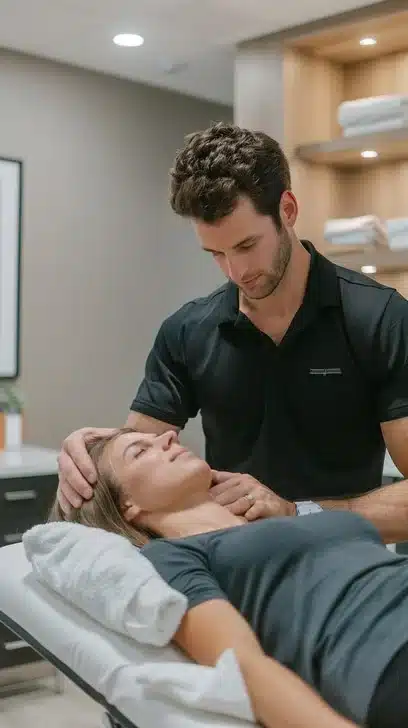
- 🔋 Transcutaneous cervical VNS (tcVNS): Devices like the GammaCore stimulate the cervical branch through the neck skin. Originally FDA-cleared for headache treatment, research is expanding to anxiety, PTSD, and inflammatory conditions.
- 📱 Consumer devices: The Pulsetto and similar consumer-grade vagus nerve stimulators have made non-invasive VNS accessible without a prescription. While the consumer research base is still developing, the underlying mechanism is the same as clinically validated devices.
⚠️ Important note: Transcutaneous VNS can both activate and suppress sympathetic activity depending on many variables, including electrode interface, user sensation and comfort, stimulus frequency, and baseline arousal. If you explore these devices, start with low settings and pay close attention to how your body responds.
🗓️ Putting It All Together: A Daily Vagal Toning Routine
You don’t need to do all of these at once. Here’s a simple daily routine that incorporates multiple vagal activation techniques with minimal time investment:
🌅 Morning (5 minutes)
- 🫁 5 minutes of cyclic sighing breathwork immediately upon waking
- 🌿 Step outside barefoot for 10 minutes of natural light and grounding
☀️ Throughout the Day
- 🚿 End your shower with 30–60 seconds of cold water
- 🎵 Hum or sing during routine tasks
- 💧 Gargle water after brushing your teeth
🌙 Evening
- 💬 Prioritize genuine social connection — a real conversation, not just scrolling
- 🧘 Slow, gentle stretching with intentional breathing before bed
These practices are cumulative. The more consistently you do them, the stronger your vagal tone becomes — and the more resilient your nervous system grows to the stressors of daily life.
✅ The Bottom Line
Your vagus nerve is your body’s built-in anxiety off switch. Learning to use it deliberately is one of the most powerful things you can do for your mental health. The research is clear: vagal tone is trainable, the tools are accessible, and the effects are cumulative. 🌿
Start with one practice today — even just 5 minutes of extended exhale breathing. Track your HRV if you have a wearable. Give it 4–8 weeks and watch what happens to your baseline anxiety.
🎁 Want our complete natural anxiety guide as a free PDF? Download our 7 Natural Ways to Stop Anxiety guide — free. → Yes, Send Me the Free Guide
❓ Frequently Asked Questions
What is the vagus nerve and why does it matter for anxiety?
The vagus nerve is the longest cranial nerve, running from the brainstem through the heart, lungs, and digestive organs. As the primary pathway of the parasympathetic nervous system, it directly counteracts the fight-or-flight stress response. High vagal tone is associated with better anxiety resilience and lower baseline anxiety.
How do I activate my vagus nerve for anxiety relief?
Effective vagus nerve activation techniques include slow diaphragmatic breathing with extended exhalation, humming or singing, gargling vigorously, cold water face immersion, yoga, progressive muscle relaxation, and aerobic exercise. Each stimulates vagal pathways through different physiological routes.
What is vagal tone and how do I improve it?
Vagal tone reflects baseline parasympathetic activity, measured indirectly through heart rate variability (HRV). It improves through consistent practice of breathwork, cold exposure, exercise, singing, and sleep optimization — building gradually over weeks to months of regular practice.
Does stimulating the vagus nerve really reduce anxiety?
Yes. Vagal stimulation shifts the autonomic nervous system toward parasympathetic dominance, reducing heart rate, lowering cortisol, decreasing amygdala reactivity, and promoting calm. Even brief vagal exercises produce immediate measurable effects on heart rate and HRV.
Can the vagus nerve become underactive from chronic stress?
Yes. Chronic stress suppresses vagal tone, reducing parasympathetic activity and keeping the body in low-grade sympathetic activation. This suppression is reversible — consistent vagal stimulation practices rebuild tone even after long periods of chronic stress.
Looking for something specific?
Search all our science-backed articles on natural anxiety relief.