Fermented foods have been part of human diets for thousands of years — long before anyone understood why they made people feel better. Now science is catching up. A growing body of research is connecting regular consumption of fermented foods to measurable improvements in anxiety, stress resilience, and mood.
This is not about trendy wellness culture. The mechanisms are real and increasingly well understood.
🫙 What Makes Fermented Foods Different
Fermentation is the process by which bacteria, yeasts, or fungi convert sugars into acids, gases, or alcohol. In doing so, they:
- ✅ Produce live beneficial bacteria (probiotics) that can colonize the gut
- 💡 Generate bioactive compounds including short-chain fatty acids, B vitamins, and neurotransmitter precursors
- 🔹 Break down anti-nutrients, making minerals more bioavailable
- 🌿 Create novel compounds like gamma-aminobutyric acid (GABA) — the brain’s main calming neurotransmitter
That last point is particularly relevant for anxiety. Some fermented foods, particularly certain yogurts and kimchi, have been found to contain measurable amounts of GABA produced by fermentation bacteria.
📊 The Key Research
🫙 The Stanford Fermented Foods Study (2021)
This was one of the most significant food-microbiome studies published in recent years. Researchers at Stanford randomized 36 healthy adults to either a high-fermented-food diet or a high-fiber diet for 10 weeks.
The fermented food group showed a significant increase in microbiome diversity and a significant decrease in 19 inflammatory proteins — including some linked to anxiety and depression. The fiber group did not show the same anti-inflammatory effect, despite the well-known gut benefits of fiber.
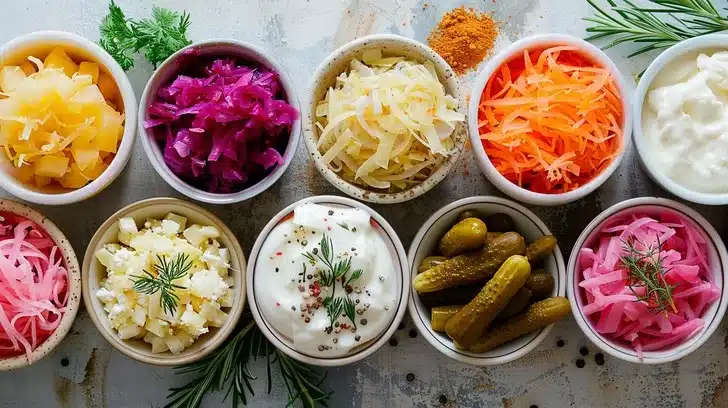
The fermented foods consumed included yogurt, kefir, fermented cottage cheese, kimchi, kombucha, and other vegetable brines. Participants who ate the most servings of fermented foods had the greatest reductions in inflammation.
😰 Kimchi and Anxiety
A 2021 cross-sectional study of over 700 adults found that regular kimchi consumption was associated with significantly lower social anxiety scores — particularly in men. The association remained after controlling for diet quality and other lifestyle factors.
😰 Yogurt and Stress Response
A UCLA study used fMRI to compare brain activity in women who ate probiotic yogurt twice daily versus those who ate non-fermented dairy or no dairy. The yogurt group showed measurable differences in how their brains processed emotional stimuli — reduced activity in areas associated with threat detection and interoceptive processing. This was a small study, but the brain imaging data was striking.
😰 Kefir and the Stress Response
Animal research on kefir has been particularly impressive. Multiple studies have shown that kefir supplementation reduces anxiety behaviors, lowers stress hormones, and modulates the HPA axis in ways that make the stress response more proportionate. Human trials are fewer but consistent with the animal findings.
🫙 The Best Fermented Foods for Anxiety Relief
🔹 Kefir
Kefir contains 30-50 different strains of beneficial bacteria and yeasts — far more diversity than most probiotic supplements. Research specifically on kefir shows stress-reducing and anxiolytic effects. Choose plain, full-fat kefir made from milk (not water kefir, which has less bacterial diversity) and avoid flavored versions loaded with sugar.
🔹 Kimchi
Traditional kimchi contains Lactobacillus kimchii and other strains that produce GABA and reduce inflammatory markers. It is also rich in vitamin C, B vitamins, and fiber. For maximum probiotic benefit, buy refrigerated kimchi — shelf-stable pasteurized versions have no live bacteria.
🔹 Sauerkraut
Traditionally fermented sauerkraut contains a wide variety of Lactobacillus strains. It is also one of the best dietary sources of vitamin K2 and is rich in fiber. Like kimchi, buy refrigerated raw sauerkraut — the canned supermarket variety is pasteurized and contains no live bacteria.
🔹 Plain Live-Culture Yogurt
Look for yogurt with “live and active cultures” on the label. Full-fat Greek yogurt from grass-fed animals is the most nutrient-dense option. Avoid yogurts with added sugars, which feed pathogenic bacteria and undermine the benefits.
🔹 Miso
Traditional Japanese miso is a fermented paste made from soybeans, salt, and koji mold. It contains multiple beneficial bacterial strains and is rich in B vitamins. Research on Japanese populations shows lower rates of anxiety and depression associated with traditional fermented soy food consumption. Use it in soups and dressings — add it after cooking to preserve the live cultures.
🔹 Kombucha
Kombucha is fermented tea containing organic acids, B vitamins, and some probiotic bacteria and yeasts. The research on kombucha specifically is less developed than on dairy-based ferments, but the anti-inflammatory compounds it produces are well documented. Be mindful of sugar content — some commercial kombuchas are high in residual sugar.
🔹 How Much Do You Need?
The Stanford study used an average of 6.3 servings of fermented foods per day to see significant effects. That sounds like a lot, but servings are small — a 6-ounce yogurt, a quarter cup of kimchi, or a small glass of kefir each count as one serving.
Practically, most people can get meaningful benefit from 2-3 servings daily as a starting point and work up from there. Start slowly if your gut is not used to fermented foods — increasing too fast can cause temporary bloating and gas as your microbiome adjusts.
🎯 The Bottom Line
Fermented foods are one of the most accessible, food-first approaches to improving gut-brain health. The 2021 Stanford study demonstrated that even in healthy adults, a high-fermented-food diet produces measurable reductions in inflammation within 10 weeks. For anxiety sufferers, whose inflammatory markers are typically elevated, the potential benefit is significant. This is an area where food genuinely is medicine — and the science increasingly backs that up.
❓ Frequently Asked Questions
Do fermented foods help with anxiety?
Yes. Fermented foods (yogurt, kefir, kimchi, sauerkraut, kombucha, miso) introduce beneficial Lactobacillus and Bifidobacterium species that produce GABA, modulate serotonin, reduce gut inflammation, and strengthen the gut-brain axis. A 2022 randomized trial found a high-fermented-food diet significantly increased microbiome diversity and reduced inflammatory markers.
Which fermented foods are best for anxiety?
Kefir and yogurt (with live cultures) have the strongest evidence for mood benefits due to their high probiotic content. Kimchi and sauerkraut contain Lactobacillus strains with documented GABA-producing capacity. Miso and tempeh provide probiotic and prebiotic benefits. Consistency of consumption matters more than variety.
How much fermented food should I eat for anxiety?
Research suggests even modest consumption — 1–2 servings of fermented foods daily — can meaningfully improve microbiome diversity and reduce inflammatory markers. A serving might be 150g of yogurt, 100g of kimchi or sauerkraut, or a glass of kefir. Consistency matters more than quantity.
Can fermented foods replace probiotic supplements for anxiety?
For general gut health and mood support, whole fermented foods offer advantages over supplements: broader range of strains, prebiotics, enzymes, and bioactive compounds. Supplements are useful when specific clinically-studied strains are needed. Ideally, use both.
Are all fermented foods equally beneficial for anxiety?
No. Only fermented foods with live and active cultures provide probiotic benefit. Many commercially processed versions are pasteurized, killing beneficial bacteria. Choose refrigerated products with labels indicating ‘live and active cultures’ for genuine probiotic benefit.
Looking for something specific?
Search all our science-backed articles on natural anxiety relief.