⚠️ Medical Disclaimer: This article is for educational purposes only and does not constitute medical advice. NeoRhythm is a consumer wellness device, not an FDA-cleared medical device. It is not intended to diagnose, treat, cure, or prevent any medical condition. Always consult a qualified healthcare provider before using neurostimulation devices, especially if you have epilepsy, a pacemaker, implanted metal, are pregnant, or have any other medical condition.
The NeoRhythm from OmniPEMF is a wearable PEMF (Pulsed Electromagnetic Field) headband that uses brainwave entrainment technology to guide your brain toward specific mental states — relaxation, sleep, focus, relaxation, or pain relief. It sits at an interesting intersection: more evidence behind the underlying technology than most consumer neurostimulation devices, but significantly less regulatory validation than the FDA-cleared devices in this review series.
Here’s a thorough, evidence-based look at what NeoRhythm actually does, what the science supports, and where it falls short.
🧲 What Is NeoRhythm? How PEMF Brainwave Entrainment Works
NeoRhythm is built on two overlapping principles: PEMF therapy and brainwave entrainment.
PEMF (Pulsed Electromagnetic Field) therapy delivers low-intensity electromagnetic pulses to tissue. At the clinical level, PEMF has FDA clearance for bone fracture healing and has been studied for depression (transcranial PEMF/T-PEMF). At the consumer level, devices like NeoRhythm operate at much lower intensities — up to 25 Gauss (2.5 mT) — positioning them as wellness rather than medical devices.
Brainwave entrainment is the brain’s tendency to synchronize its electrical activity to external rhythmic stimuli — a well-documented neurological phenomenon. NeoRhythm delivers electromagnetic pulses at specific frequencies (delta, theta, alpha, beta) to nudge the brain toward a target mental state. Think of it like an external metronome for your nervous system.
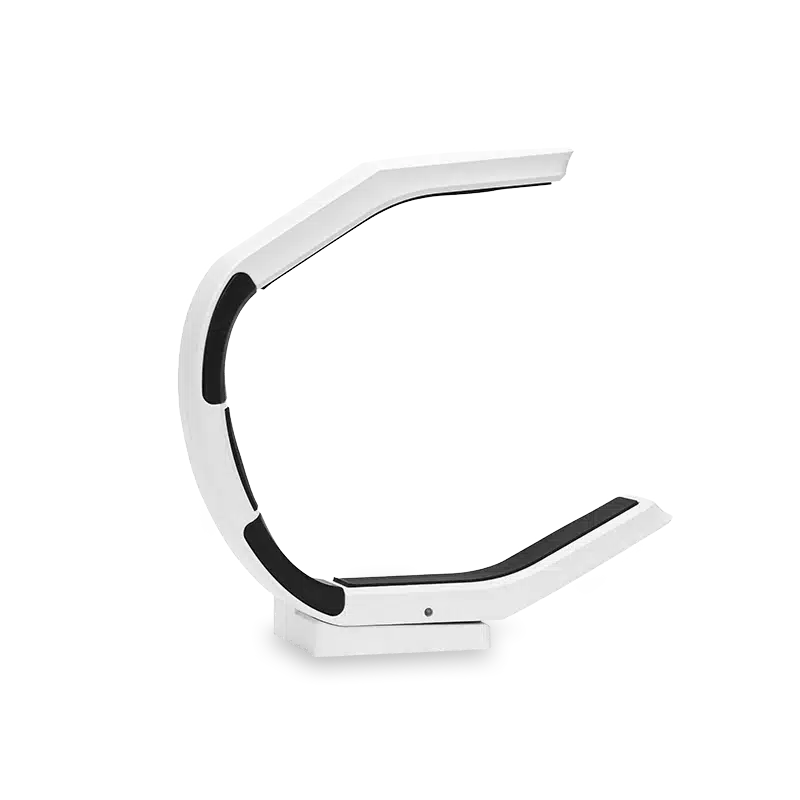
The device can be worn in five positions on the head (or around the neck) to target different brain regions, and connects to a smartphone app via Bluetooth for program selection and customization.
📋 NeoRhythm Specs at a Glance
| Technology | PEMF (Pulsed Electromagnetic Field) brainwave entrainment |
| Frequency Range | 1–303 Hz |
| Max Intensity | 25 Gauss (2.5 mT) |
| Waveform | Trapezoidal |
| Programs | 14 preset programs + Advanced Mode (custom frequency/intensity/duration) |
| Control | Smartphone app (Bluetooth) + gesture tap control |
| Battery Life | Up to 8–10 hours |
| Price | ~$309 |
| FDA Status | Not FDA-cleared (consumer wellness device) |
| Warranty | 2-year |
| Return Policy | 60-day money-back guarantee |
🎛️ The 7 Programs Most Relevant to Anxiety and Sleep
NeoRhythm’s 14 programs cover a wide range of wellness goals. The ones most relevant to StopAnxiety.org readers:
- Deep Relaxation — targets alpha/theta frequencies associated with calm, present-moment awareness
- Improve Sleep — delta frequency entrainment to support sleep onset
- Theta Relaxation — deep relaxation states, theta waves (4–8 Hz)
- Relaxation: Calming and Synchronization — slower entrainment for stress reduction
- Pain Control — relevant for anxiety-related tension and somatic symptoms
- Energy and Vitality — beta frequencies for alertness (less relevant to anxiety)
- Enhance Mental Capacity — focus/concentration mode
The Advanced Mode is the standout feature for experienced users — allowing full manual control over frequency, intensity, and session duration. This is unusually flexible for a consumer device.
🔬 What Does the Research Actually Show?
This is where NeoRhythm gets more interesting than most competitors — and also where honest assessment requires some nuance.
✅ Evidence Supporting the Technology
The strongest study to date using NeoRhythm hardware specifically was published in Electromagnetic Biology and Medicine (February 2025): a double-blind, placebo-controlled trial with 485 volunteers using the NeoRhythm U-band for neck application (vagus nerve stimulation). Across three active frequency groups (6 Hz, 16 Hz, 32 Hz), significant improvements in sleep quality and reductions in anxiety were found, with effects most pronounced at 16 Hz. This is a meaningful result — a proper randomized controlled trial, using this actual device, showing real effects on anxiety and sleep.
Broader PEMF research supports the underlying mechanism: PEMF has been shown in multiple studies to increase BDNF (brain-derived neurotrophic factor), promote neuroplasticity, reduce inflammation, and modulate autonomic nervous system activity. Transcranial PEMF (T-PEMF) for depression is currently in a Phase 2 randomized clinical trial at Copenhagen’s Mental Health Centre (NCT06005103, estimated completion August 2026).
Brainwave entrainment as a mechanism has solid basic science behind it — the brain’s tendency to synchronize to external electromagnetic rhythms is well-established, though translating this into specific clinical outcomes is still an active research area.
⚠️ Important Caveats
- The 2025 study used the U-band in neck position — not the standard headband configuration most users will use. Results may not directly translate to head-worn use for brainwave entrainment.
- NeoRhythm operates at consumer-level intensities (up to 25 Gauss) — significantly lower than clinical PEMF devices. Whether this intensity is sufficient for reliable therapeutic effects remains debated.
- Most positive research is on PEMF technology broadly, not NeoRhythm specifically. Extrapolating from clinical PEMF studies to consumer devices requires caution.
- No FDA clearance — NeoRhythm has not gone through the rigorous regulatory process that Alpha-Stim, Fisher Wallace, or Flow FL-100 have undergone.
👍 What Users Report
User feedback is broadly positive, with consistent themes across independent reviews:
- Sleep: The most commonly reported benefit — many users find the Improve Sleep program helps them fall asleep faster and with a quieter mind
- Relaxation: Deep Relaxation and Theta Relaxation programs consistently rated as effective for unwinding after stressful days
- Focus: The Enhance Mental Capacity program gets positive reviews for work sessions
- Relaxation: Users report easier access to deeper relaxation states, particularly with the Theta programs
- Build quality: Generally rated well; described as comfortable and lightweight for wear during sessions
Common criticisms include the learning curve for program selection, variability in results between users, and the fact that many people aren’t sure whether effects are real or placebo — which, to be fair, is an honest reflection of where consumer PEMF science currently stands.
⚖️ NeoRhythm vs. Other Devices in This Series
| Device | Technology | FDA Status | Evidence Level | Price |
|---|---|---|---|---|
| Flow FL-100 | tDCS | FDA Approved (Rx) | Nature Medicine RCT, 55K+ users | $500–$800 |
| Alpha-Stim | CES | FDA Cleared | 100+ studies, Lancet RCT | $795–$895 |
| Fisher Wallace | CES | FDA Cleared | Multiple RCTs | $499 |
| NeoRhythm | PEMF | Not cleared | 1 RCT (neck VNS), broader PEMF literature | $309 |
| Sensate | Infrasound VNS | Not cleared | No controlled trials | $299 |
✅ Who NeoRhythm Is a Good Fit For
- Biohackers and self-experimenters comfortable with emerging technology
- People who want a device for relaxation, relaxation, and sleep rather than clinical depression treatment
- Those who want flexible frequency control — the Advanced Mode is genuinely powerful for experienced users
- Anyone who has already tried the evidence-backed options (Alpha-Stim, Fisher Wallace) and wants to explore PEMF as an additional tool
- Users interested in PEMF’s broader benefits beyond anxiety — pain management, focus, energy
❌ Who Should Look Elsewhere
- People seeking clinically validated treatment for moderate-to-severe depression or anxiety — choose Alpha-Stim, Fisher Wallace, or Flow FL-100
- Those who need insurance coverage — NeoRhythm is not reimbursable
- Anyone with a pacemaker, implanted metal devices, or epilepsy — PEMF is contraindicated
- People who want a passive, simple device — NeoRhythm’s value increases with active program selection and experimentation
📊 StopAnxiety.org Rating
Rating: 4.1 / 5
NeoRhythm earns a solid score for having more research behind it than most consumer neurostimulation devices — the 2025 double-blind RCT using this specific hardware is meaningful. The Advanced Mode, long battery life, and multi-position flexibility add genuine value. It loses points for the lack of FDA clearance, the distance between consumer-intensity PEMF and clinical PEMF research, and the inherent uncertainty around brainwave entrainment outcomes at the individual level. At $309 with a 60-day return window, the risk-to-reward is reasonable for curious biohackers — but if anxiety or depression is your primary concern, the FDA-cleared devices in this series have a stronger evidence case.
📚 Also on StopAnxiety.org:
- Alpha-Stim Review — FDA-Cleared CES for Anxiety and Insomnia
- Fisher Wallace Review — FDA-Cleared CES for Depression, Anxiety and Insomnia
- Flow Neuroscience Review — The First FDA-Approved At-Home Brain Stimulation Device
- Apollo Neuro Review — Does This Anxiety Wearable Actually Work?
- Browse All Tools & Devices Reviews →
Medical Disclaimer: This article is for educational purposes only and does not constitute medical advice. NeoRhythm is a consumer wellness device and is not FDA-cleared for any medical indication. Always consult a qualified healthcare provider before starting any neurostimulation device, particularly if you have epilepsy, a pacemaker, implanted metal, or any serious medical condition. Individual results vary.
Looking for something specific?
Search all our science-backed articles on natural anxiety relief.