⚠️ Medical Disclaimer: This article is for educational purposes only and does not constitute medical advice. Hapbee is a consumer wellness device, not an FDA-cleared medical device. It is not intended to diagnose, treat, cure, or prevent any medical condition. Always consult a qualified healthcare provider before using any neurostimulation or electromagnetic wellness device.
Hapbee makes one of the more unusual claims in the consumer wellness space: that its neckband can deliver the feeling of caffeine, CBD, melatonin, or alcohol — without you actually ingesting anything. It does this by emitting ultra-low radio frequency energy (ulRFE) signals that the company says mimic the electromagnetic signature of these molecules.
It sounds like science fiction. The honest answer is: the underlying technology is real, the evidence base is thin, and user experiences vary considerably. Here’s a full breakdown.
📡 What Is Hapbee? How ulRFE Technology Works
Hapbee was developed in Vancouver, Canada and is built on patented ultra-low Radio Frequency Energy (ulRFE®) technology — originally pioneered by EMulate Therapeutics, a clinical-stage biotech company. The core idea is that every molecule has a unique electromagnetic signature. Hapbee uses Superconducting Quantum Interference Devices (SQUID magnetometers) to record these molecular signatures, then plays them back through the wearable at extremely low power levels.
The claim is that your body responds to the magnetic pattern as if the molecule were physically present — without any chemical entering your bloodstream. Think of it as an electromagnetic impression of a compound rather than the compound itself.
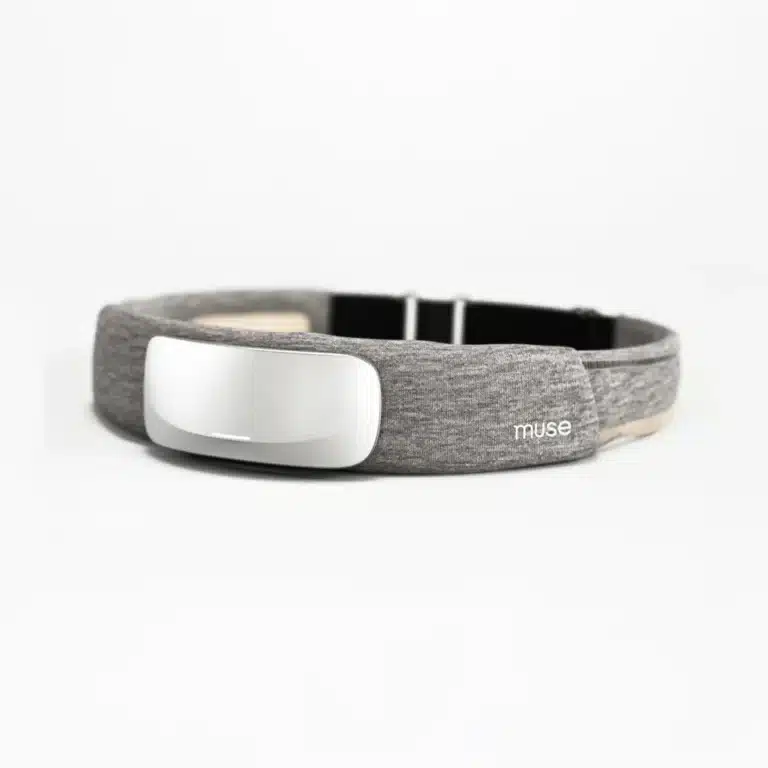
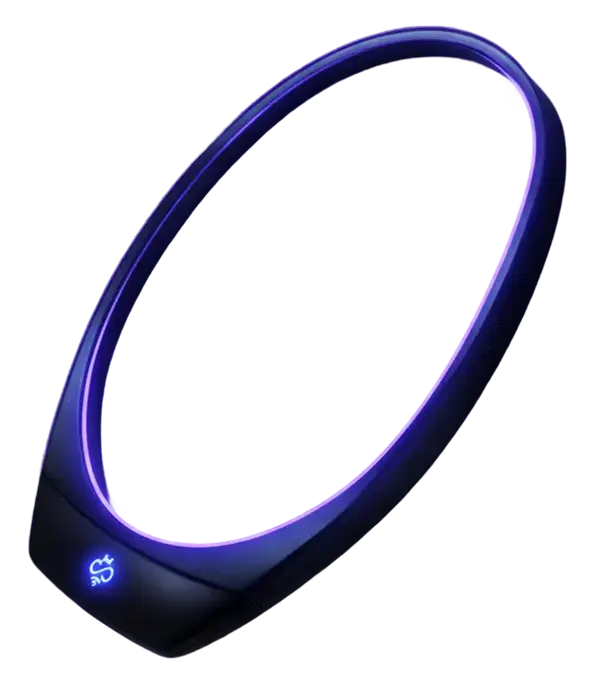
Hapbee offers two main hardware products: the Hapbee Neckband (for daytime use) and the Hapbee Smart Sleep Pad (for overnight sleep support). Both are controlled through the Hapbee app, which lets you select from a catalog of signals.
📋 Hapbee Specs at a Glance
| Technology | Ultra-Low Radio Frequency Energy (ulRFE®) bio-streaming |
| Hardware | Hapbee Neckband + Hapbee Smart Sleep Pad |
| Signals Available | Happy, Alert, Focus, Calm, Relax, Deep Sleep, Bedtime, Boost (8 core signals) |
| Battery Life | 40+ hours (neckband) |
| Control | Smartphone app (Bluetooth) |
| Price | ~$249 device only; ~$19/month or ~$199/year subscription for full signal access |
| Age Restriction | 21+ (some signals mimic alcohol/nicotine) |
| FDA Status | Not FDA-cleared (consumer wellness device) |
| Money-Back Guarantee | 100% satisfaction guarantee with free returns |
🎛️ The Signals Most Relevant to Anxiety and Sleep
Hapbee’s catalog of 8 signals covers a range of mental states. The ones most relevant to StopAnxiety.org readers:
- Calm — designed to reduce mental noise and promote a settled, grounded feeling
- Relax — deeper physical and mental unwinding; modeled on compounds associated with relaxation
- Deep Sleep — for sleep onset and depth; mimics the signature of melatonin and related compounds
- Bedtime — a gentler pre-sleep signal to ease the transition from wakefulness
- Happy — mood-lifting signal for low-grade anxiety and flat affect
- Focus — alertness without the edge (less relevant for anxiety, but useful for anxious minds that struggle to concentrate)
The 21+ age restriction is worth flagging: some signals mimic the effects of alcohol and nicotine, which is why Hapbee limits the product to adults. This is an important consideration and a meaningful difference from other devices in this series.
🔬 What Does the Research Actually Show?
This is where Hapbee’s story gets complicated — and where honesty matters most.
⚠️ The Evidence Gap
There are no published, independent, peer-reviewed randomized controlled trials on Hapbee’s consumer devices for anxiety or sleep. This is the most important thing to know before buying. Hapbee has conducted internal blinded testing showing that users can distinguish between active signals and placebo at above-chance rates — which is a meaningful result, but it is not the same standard as the independent clinical evidence behind Alpha-Stim, Fisher Wallace, Apollo Neuro, or Flow FL-100.
The broader ulRFE technology was pioneered by EMulate Therapeutics, which has conducted more rigorous research — but EMulate’s work is in a clinical-grade device (the Voyager) at far higher specifications than Hapbee’s consumer product. Extrapolating from EMulate’s research to Hapbee’s neckband requires a significant leap of faith.
✅ What the Technology Does Have Going for It
- ulRFE is a real, patented technology — not pseudoscience invented for marketing
- The SQUID-based molecular recording process has a legitimate scientific foundation
- Internal Hapbee testing does show signal discrimination above placebo chance rates
- The broader field of low-power electromagnetic biology has peer-reviewed support (though not specific to Hapbee’s consumer device)
- 40+ hour battery life and the Sleep Pad form factor are genuinely practical advantages
👍 What Users Report
Hapbee has a polarized user base — people tend to either swear by it or feel nothing. The most consistent positive reports:
- Sleep: The Deep Sleep and Bedtime signals are the most consistently praised — many users report faster sleep onset and more consistent deep and REM sleep, particularly with the Sleep Pad
- Calm/Relax: A meaningful subset of users report genuine reduction in mental noise and physical tension within 20–30 minutes of use
- Focus: Some users find the Focus signal helpful for anxiety-driven concentration issues
- Non-chemical appeal: Users who prefer to avoid supplements, pharmaceuticals, or ingestibles find the concept genuinely valuable
Common criticisms include inconsistent results between users, the subscription cost on top of the hardware price, and the lack of independent clinical validation. Some reviewers flag the marketing language as overstated relative to the evidence.
⚖️ Hapbee vs. Other Devices in This Series
| Device | Technology | FDA Status | Evidence Level | Price |
|---|---|---|---|---|
| Flow FL-100 | tDCS | FDA Approved (Rx) | Nature Medicine RCT, 55K+ users | $500–$800 |
| Alpha-Stim | CES | FDA Cleared | 100+ studies, Lancet RCT | $795–$895 |
| Apollo Neuro | Vibration/VNS | Not cleared | Multiple peer-reviewed RCTs | $349 |
| NeoRhythm | PEMF | Not cleared | 1 RCT (neck VNS), broader PEMF literature | $309 |
| Hapbee | ulRFE | Not cleared | No independent RCTs; internal blinded testing only | $249 + subscription |
| Pulsetto | tVNS | Not cleared | Weakest in series | $269 |
✅ Who Hapbee Is a Good Fit For
- People who want a chemical-free alternative to supplements, melatonin, or CBD
- Those interested in sleep support specifically — the Sleep Pad is the most practically designed sleep device in this review series
- Curious biohackers comfortable with emerging, lightly-validated technology
- Anyone who has already tried more evidence-backed options and wants to experiment further
- Users who want an extremely long battery life (40+ hours) without constant recharging
❌ Who Should Look Elsewhere
- People wanting clinically validated treatment for anxiety or depression — choose Alpha-Stim, Fisher Wallace, or Flow FL-100
- Those under 21 — the age restriction is firm
- Anyone uncomfortable with the subscription model on top of hardware cost
- People who need insurance reimbursement — not possible with Hapbee
- Those who require strong independent clinical evidence before purchasing
📊 StopAnxiety.org Rating
Rating: 3.6 / 5
Hapbee scores above Pulsetto for the legitimacy of its underlying technology (ulRFE is a real, patented approach with a scientific foundation) and the practical advantage of the Sleep Pad form factor. But the absence of independent peer-reviewed RCTs is a genuine gap that honest reviewers can’t overlook — particularly when devices like Apollo Neuro and NeoRhythm have at least some published controlled trial data. The 21+ restriction and subscription model are additional friction points. That said, if your primary goal is chemical-free sleep support and you’re comfortable with early-stage technology, the 100% money-back guarantee makes it a low-risk experiment. At $249 plus subscription, it sits in a reasonable price range — just go in with calibrated expectations.
📚 Also on StopAnxiety.org:
- Alpha-Stim Review — FDA-Cleared CES for Anxiety and Insomnia
- NeoRhythm Review — PEMF Brainwave Entrainment for Anxiety and Sleep
- Apollo Neuro Review — Does This Anxiety Wearable Actually Work?
- Flow Neuroscience Review — The First FDA-Approved At-Home Brain Stimulation Device
- Browse All Tools & Devices Reviews →
Medical Disclaimer: This article is for educational purposes only and does not constitute medical advice. Hapbee is a consumer wellness device and is not FDA-cleared for any medical indication. Always consult a qualified healthcare provider before starting any electromagnetic wellness device. Individual results vary.
Looking for something specific?
Search all our science-backed articles on natural anxiety relief.