⚠️ Medical Disclaimer: This article is for informational purposes only and does not constitute medical advice. Always consult a qualified healthcare provider before starting any herbal supplement, especially if you take medications or have a medical condition. Herbs can interact with prescription drugs.
Ancient cultures understood something that modern neuroscience is only now confirming: deliberate heat exposure does something profound to the anxious mind. 🌡️ From Finnish sauna traditions to Roman bathhouses to Native American sweat lodges, humanity has used controlled heat as a tool for mental and emotional restoration across millennia and continents.
Today, infrared sauna therapy is emerging as one of the most well-supported biohacking tools for anxiety — not because of tradition, but because of an increasingly compelling body of research documenting measurable effects on the exact neurochemical systems that anxiety disorders dysregulate. The mechanisms involve dynorphin and opioid receptor dynamics, serotonin pathway activation, HPA axis recalibration, and a remarkable phenomenon called hyperthermic conditioning that builds lasting stress resilience. 🔬
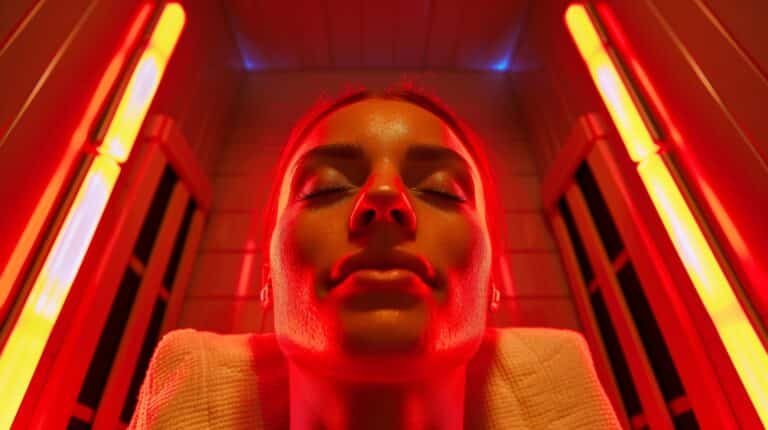
Infrared saunas differ from traditional Finnish saunas in an important way: instead of heating the air to extreme temperatures (80–100°C), infrared panels emit radiant heat that directly warms the body at lower ambient temperatures (45–65°C). This means deeper tissue penetration, longer tolerable sessions, and a gentler cardiovascular load — making infrared therapy more accessible and arguably more therapeutically versatile than traditional sauna. ✨
🎯 What You’ll Learn
- 🔥 Why traditional sauna and infrared sauna affect anxiety through different — but complementary — mechanisms
- 🧬 The 5 biological pathways through which infrared heat reduces anxiety
- 📊 What the clinical research shows, including landmark studies on sauna and depression/anxiety
- 🌡️ Exactly how hot, how long, and how often for anxiety benefits
- 💡 Near-infrared vs. far-infrared vs. full-spectrum — which matters for anxiety
- 🏠 Home unit recommendations from entry-level to professional grade
- ❄️ How to combine sauna with cold plunge for maximum nervous system benefit
🧬 Why Heat Affects Anxiety: The Biology
🔄 1. The Dynorphin-Opioid Mechanism
This is one of the most fascinating — and underappreciated — mechanisms behind heat therapy’s mood effects. When your body is exposed to significant heat, it releases dynorphin, a peptide that initially causes the discomfort and slight dysphoria associated with heat stress. In response to dynorphin, opioid receptors in the brain upregulate — they become more sensitive. 🧠
After the sauna session ends and body temperature normalizes, these newly sensitized receptors are now primed to respond more strongly to the brain’s natural endorphins. The result is a post-sauna mood elevation that researchers compare biochemically to a runner’s high — a deep calm that lasts for hours or even days. 😌
This mechanism means that the anxiety benefits of sauna therapy are not just acute — they build over time as opioid receptor sensitivity is progressively enhanced with consistent practice.
😊 2. Serotonin Pathway Activation
Heat exposure activates thermosensitive neurons in the raphe nuclei — the brainstem region responsible for serotonin synthesis and distribution. Studies document significant increases in brain serotonin levels following heat exposure, through a pathway distinct from the mechanisms of SSRI medications. ✨
This serotonin activation is mediated partly through TRPV1 receptors (heat-sensitive ion channels) in the skin, which relay signals directly to serotonin-producing neural circuits. Regular heat exposure may therefore serve as a form of passive serotonin system conditioning — highly relevant because serotonin deficiency or dysregulation underlies most anxiety and mood disorders.
📉 3. HPA Axis Recalibration and Cortisol Normalization
The relationship between heat and cortisol is counterintuitive but well-documented. While an initial sauna session produces a brief cortisol spike (a normal stress response), regular sauna practice recalibrates the HPA axis over time — reducing baseline cortisol levels and improving the cortisol awakening response that governs daily energy and anxiety regulation. 🌅
A Finnish cohort study tracking regular sauna users found those practicing 4–7 sessions per week had significantly more favorable cortisol profiles and lower all-cause mortality compared to infrequent users.
🌱 4. BDNF Increases and Neuroplasticity
Heat stress is one of the few non-exercise interventions reliably documented to increase Brain-Derived Neurotrophic Factor (BDNF) — the protein that promotes neurogenesis, supports hippocampal health, and enables the neural plasticity that allows anxious brains to rewire. 🧠 BDNF levels are consistently low in anxiety and depression, and increasing BDNF is a proposed mechanism of action for antidepressant medications.
🛡️ 5. Hyperthermic Conditioning and Stress Inoculation
Regular heat exposure induces heat shock protein (HSP) production — cellular repair proteins that improve resilience to future stressors, not just thermal ones. This hyperthermic conditioning effect appears to transfer to psychological stress resilience: people who regularly practice heat exposure show more adaptive stress responses, lower anxiety reactivity, and better emotional regulation. 💪
📊 What the Clinical Research Shows
📄 The Whole-Body Hyperthermia Study (2016)
A landmark randomized, double-blind study published in JAMA Psychiatry examined a single session of whole-body hyperthermia in patients with major depression. Results showed a significant antidepressant effect lasting up to six weeks from a single session. Anxiety scores improved alongside depressive symptoms. 🌟 Researchers proposed the TRPV1-serotonin pathway as the primary mechanism.
🇫🇮 Finnish Sauna Cohort Studies
The largest body of population-level evidence comes from Finland. Large cohort studies following thousands of regular sauna users documented associations between sauna frequency and reduced risk of depression, anxiety, and psychotic disorders — with dose-response relationships suggesting that more frequent use produces stronger mental health benefits. 📈
🇯🇵 Infrared Sauna and Chronic Fatigue / Mood
Japanese research examining infrared sauna specifically found significant improvements in mood, fatigue, and anxiety scores in patients with chronic fatigue syndrome after a 4-week infrared sauna protocol. The lower temperatures were associated with good tolerability even in people who could not manage traditional high-heat sauna.
❤️ Sauna and HRV
Multiple studies have documented improved heart rate variability (HRV) following regular sauna practice — the same parasympathetic nervous system marker improved by cold therapy. The outcome is shared: trained autonomic flexibility and reduced anxiety reactivity. 📉
🌡️ Infrared vs. Traditional Sauna: What’s Best for Anxiety?
🔥 Traditional sauna (80–100°C): Higher temperatures, shorter optimal sessions (10–20 minutes), stronger acute cardiovascular stress, more research backing. The high-heat environment activates TRPV1 receptors more intensely and may produce stronger acute serotonin effects.
💡 Infrared sauna (45–65°C): Lower ambient temperature with deeper tissue penetration from infrared wavelengths. Longer tolerable sessions (20–40 minutes), gentler cardiovascular load, better accessibility. The radiant heat penetrates 2–3 inches into tissue, producing a core body temperature increase equivalent to traditional sauna at lower air temperatures.
🔆 Near-Infrared vs. Far-Infrared vs. Full-Spectrum
- 🔴 Far-infrared (FIR, 5–15 microns): The most common type in home sauna units. The most studied for cardiovascular and mood benefits.
- ✨ Near-infrared (NIR, 0.7–1.4 microns): Penetrates most deeply and overlaps with red light therapy wavelengths — adding photobiomodulation benefits on top of heat therapy.
- 🌈 Full-spectrum: Combines near, mid, and far-infrared wavelengths. Provides the broadest range of mechanisms — the preferred option for anxiety when budget allows.
📋 Infrared Sauna Protocol for Anxiety
🌡️ Temperature and Duration
Start at 45–50°C (113–122°F) for your first sessions, working up to 55–65°C (131–149°F) as your body adapts. Target 20–30 minutes per session. More experienced users can extend to 40 minutes.
📅 Frequency
3–5 sessions per week is the evidence-supported range. The Finnish cohort data suggests 4–7 sessions weekly for maximum mental health benefit. Consistency over time matters more than session frequency. ✅
⏰ Timing
Unlike cold therapy, sauna sessions work well in the evening 🌙 for many people — the post-sauna temperature drop naturally promotes sleepiness and mimics the circadian temperature decline that triggers melatonin release. Morning sessions are also effective for mood and energy. ☀️
💧 Hydration
Hydrate well before and after. 500ml water before, 500–1000ml after, with electrolytes if sweating heavily. Dehydration negates many of sauna’s benefits and worsens post-session anxiety. 🥤
❄️🔥 Sauna + Cold Plunge: The Ultimate Nervous System Reset
The combination of sauna and cold plunge — deeply embedded in Scandinavian, Finnish, and Japanese wellness traditions — is supported by research as more effective for mood, circulation, and autonomic nervous system health than either alone. 🏆
🔄 A basic contrast protocol:
- 🔥 Sauna: 15–20 minutes at 55–65°C
- ❄️ Cold plunge or cold shower: 2–3 minutes at 10–15°C
- 😌 Rest: 5–10 minutes at room temperature
- 🔁 Repeat 2–3 cycles if desired
- 🎯 End on cold for norepinephrine surge and alertness, or end on warm for relaxation and sleep preparation
🏠 Home Infrared Sauna Recommendations
💰 Entry-Level Portable Units ($200–$600):
Portable infrared sauna blankets (HigherDose, MiHigh) and portable tent saunas offer far-infrared exposure without the space or installation requirements of a full cabin unit. Excellent for beginners. 👍
🏡 Mid-Range 1–2 Person Cabin ($1,500–$3,500):
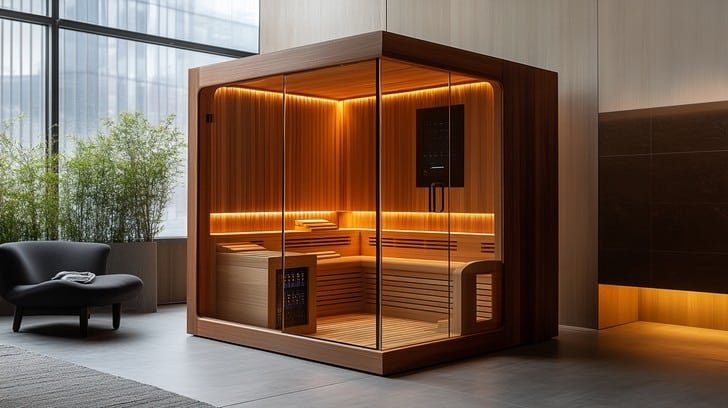
Brands like Dynamic Saunas, Radiant Saunas, and SereneLife offer quality far-infrared cabin units. Look for low-EMF carbon fiber heating panels, solid wood construction (hemlock or cedar), and digital temperature controls. These represent the best value for home users. ⭐
👑 Premium Full-Spectrum Units ($3,500–$8,000+):
Clearlight Sanctuary saunas are widely considered the gold standard for home full-spectrum infrared. HigherDose and Sunlighten also offer excellent full-spectrum options. Whatever unit you consider, prioritize: verified EMF testing, independently verified infrared output levels, solid wood (not plywood) construction, and a warranty of at least 5 years. 🛡️
🔗 Stacking Infrared Sauna With Other Anxiety Interventions
❄️ + Cold plunge contrast: The most powerful combination. Amplifies HRV improvements, autonomic flexibility, and mood elevation beyond either alone.
💊 + Magnesium: Sauna sweating depletes magnesium. Supplementing magnesium glycinate post-sauna replenishes it while adding independent HPA axis calming effects.
🌿 + Ashwagandha: Both reduce cortisol through complementary mechanisms. Creates an additive HPA axis recalibration effect.
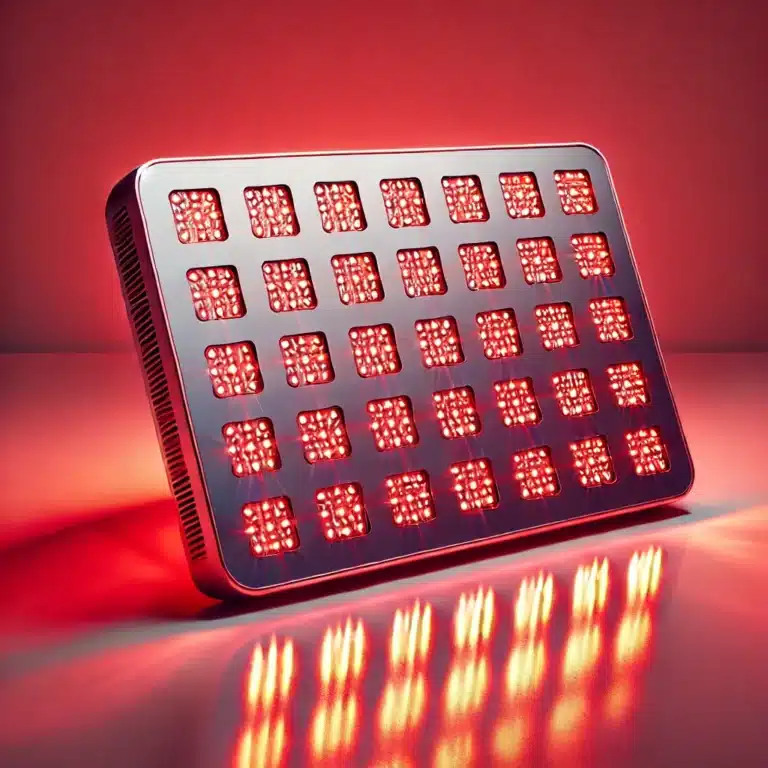
🔴 + Red light therapy: Full-spectrum infrared saunas already include near-infrared wavelengths. Adding a dedicated red light session broadens coverage into the 630–680nm range for additional serotonin and mitochondrial effects.
⚠️ Safety: Who Should Be Cautious
- ❤️ Cardiovascular conditions: Heat significantly increases heart rate and cardiac output. Anyone with heart disease, uncontrolled hypertension, or arrhythmia should consult their cardiologist before using sauna.
- 💉 Low blood pressure: Sauna-induced vasodilation can cause dangerous drops in blood pressure. Rise slowly and have support available.
- 🤰 Pregnancy: Core temperature elevation above 38.9°C is associated with fetal risks. Avoid sauna during pregnancy.
- 🍺 Alcohol: Never use sauna while intoxicated — alcohol impairs thermoregulation and dramatically increases cardiovascular risk.
- 💊 Medications: Some medications impair heat tolerance or interact with sauna-induced hemodynamic changes. Review with your prescribing doctor.
✅ The Bottom Line
Infrared sauna is among the most physiologically comprehensive tools in the anxiety biohacking toolkit. Unlike interventions that address a single mechanism, regular heat therapy simultaneously engages serotonin pathways 😊, recalibrates the HPA axis 📉, elevates BDNF 🌱, builds opioid receptor sensitivity 🔄, and conditions the autonomic nervous system toward greater resilience 🛡️ — all while being passive, deeply restorative, and increasingly accessible for home use.
Start conservatively, prioritize hydration 💧, build session length and temperature gradually, and consider pairing with cold therapy ❄️ for the most complete nervous system reset available outside a clinical setting.
🎁 Want a personalized natural anxiety relief plan? Get our free guide covering the evidence-based tools, supplements, and daily habits that actually move the needle. Download it free here →
Looking for something specific?
Search all our science-backed articles on natural anxiety relief.