⚠️ Medical Disclaimer: This article is for informational purposes only and does not constitute medical advice.
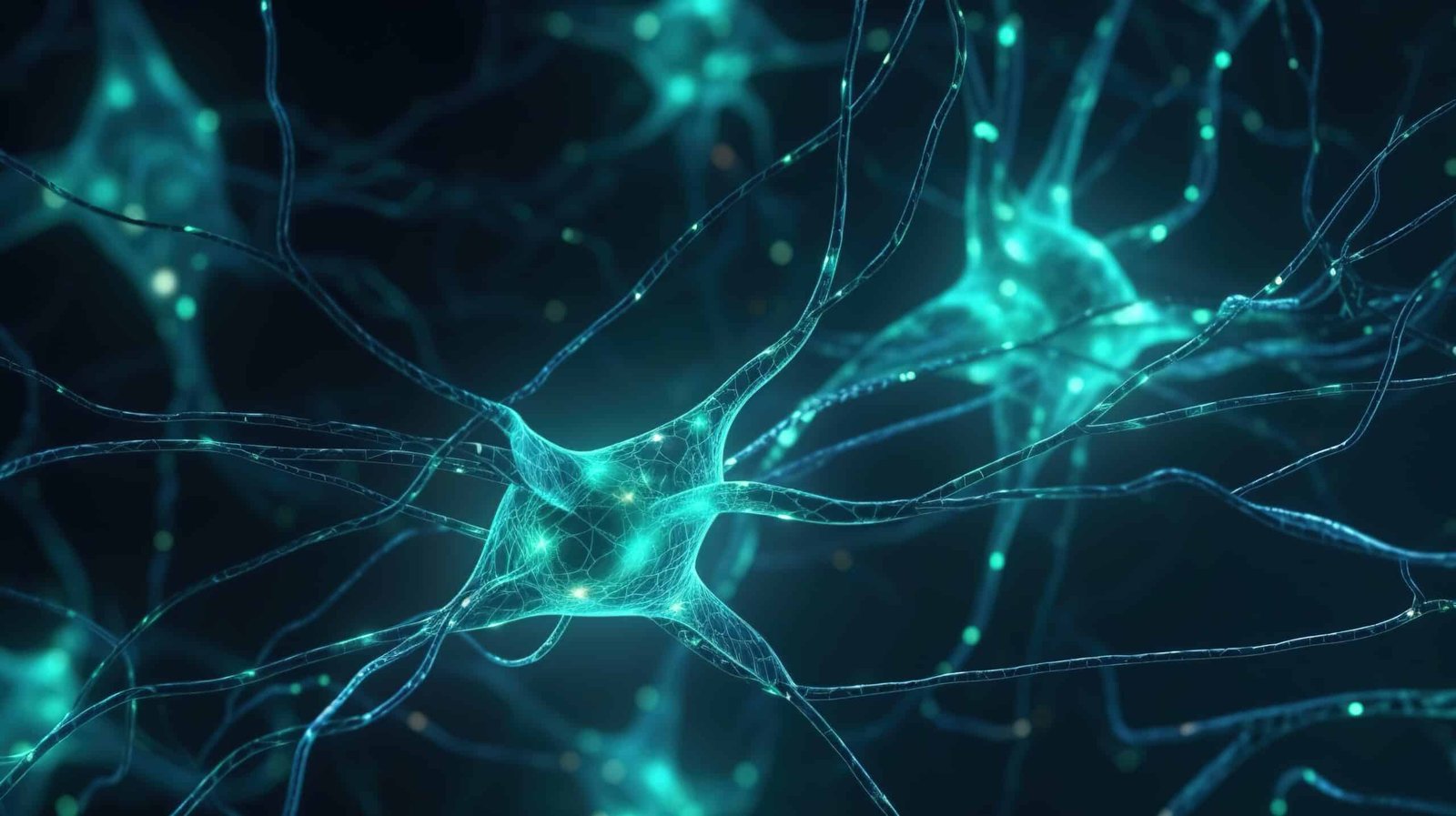
Neurotransmitters are the chemical messengers your brain uses to communicate between neurons. They don’t simply cause emotions — they modulate the complex neural circuits that produce mood, anxiety, motivation, focus, and stress resilience. Understanding how they work — and how they can become dysregulated — is foundational to understanding anxiety at a biological level.
The Key Neurotransmitters in Anxiety
GABA: The Brain’s Primary Brake
Gamma-aminobutyric acid (GABA) is the main inhibitory neurotransmitter in the central nervous system. It works by hyperpolarising neurons — making them less likely to fire — and is the primary mechanism by which the brain reduces neural excitability and promotes calm. When GABA tone is adequate, the nervous system can downregulate arousal effectively. When it is low or impaired, neural circuits become hyperexcitable and anxiety results. Research published in Psychopharmacology (2003) documented reduced GABA levels and impaired GABA receptor function across multiple anxiety disorders. This is why benzodiazepines — which enhance GABA-A receptor activity — are among the most acutely effective anxiolytics, and why natural compounds that support GABAergic function (magnesium, L-theanine, ashwagandha withanolides, valerian) have anxiolytic effects.
Serotonin: Mood Stability and Anxiety Regulation
Serotonin (5-hydroxytryptamine, 5-HT) plays a central role in mood regulation, anxiety, sleep, and cognitive flexibility. It is synthesised from the amino acid tryptophan and acts across 14 different receptor subtypes with varied effects. Approximately 90–95% of the body’s serotonin is produced in the gut — directly linking gut health to mood and anxiety. Research in The Lancet (2002) demonstrated that brain serotonin turnover is directly proportional to sunlight exposure — explaining seasonal patterns in anxiety and depression. SSRIs work by preventing serotonin reuptake, increasing synaptic serotonin availability. Natural approaches that support serotonin include morning light exposure, exercise, tryptophan-rich diet, and magnesium.
Norepinephrine (Noradrenaline): The Alarm Signal
Norepinephrine is the primary neurotransmitter of the sympathetic nervous system and is central to the fight-or-flight response. It drives alertness, attention, and arousal — essential functions that become pathological when chronically overactive. The locus coeruleus — the brainstem’s primary norepinephrine production centre — discharges massively during panic attacks and is chronically hyperactive in anxiety disorders. Research in the Archives of General Psychiatry (1987) established locus coeruleus hyperactivity as a core feature of panic disorder. SNRIs (serotonin-norepinephrine reuptake inhibitors) address this pathway pharmacologically; slow breathing, vagal activation, and regular exercise reduce locus coeruleus reactivity naturally.
Dopamine: Motivation, Reward, and Stress Regulation
Dopamine drives motivation, reward anticipation, and goal-directed behaviour. Chronic stress dysregulates dopaminergic signalling — reducing motivation, impairing executive function, and reducing the capacity for positive emotion (anhedonia). Research in Neuron (2013) documented how chronic stress reduces dopamine receptor density in the prefrontal cortex, impairing stress resilience. Exercise, sunlight, cold exposure, and L-tyrosine (dopamine’s dietary precursor) all support dopaminergic function.
Glutamate: The Accelerator
Glutamate is the brain’s primary excitatory neurotransmitter — the counterpart to GABA’s inhibitory action. Excessive glutamate activity produces hyperexcitability, anxiety, and in extreme cases, excitotoxicity. Chronic stress increases glutamate release and reduces the efficiency of its reuptake — contributing to the neural hyperexcitability characteristic of anxiety disorders. Research published in Biological Psychiatry (2006) found elevated glutamate levels in the anterior cingulate cortex of patients with GAD. L-theanine, magnesium, and CBD all modulate glutamate activity through NMDA receptor antagonism.
Endocannabinoids: Stress Buffer and Fear Extinction
The endocannabinoid system — comprising endogenous cannabinoids (anandamide, 2-AG) and their receptors (CB1, CB2) — plays a critical role in stress regulation, fear extinction, and emotional memory. Chronic stress depletes endocannabinoid tone, reducing the brain’s capacity to extinguish fear memories and buffer stress. Research in the Journal of Experimental Biology (2012) found exercise-induced anandamide elevation produces anxiolytic effects. CBD may also support endocannabinoid tone by inhibiting anandamide breakdown.
Natural Ways to Support Neurotransmitter Balance
For GABA Support
- Magnesium glycinate — positive GABA-A receptor modulator. Read our magnesium guide
- L-theanine — increases GABA and glycine, reduces glutamate. Read our L-theanine guide
- Ashwagandha withanolides — GABA-A receptor positive modulators. Read our ashwagandha guide
For Serotonin Support
- Morning sunlight — directly increases serotonin synthesis. See our sunlight guide
- Exercise — increases serotonin release and receptor sensitivity. See our exercise guide
- Gut health — 90–95% of serotonin is made in the gut. See our gut health guide
- Saffron extract — inhibits serotonin reuptake. Read our saffron guide
For Norepinephrine Regulation
- Slow breathing and vagal activation — reduces locus coeruleus reactivity. See our breathing guide
- Regular aerobic exercise — normalises norepinephrine turnover
- Rhodiola — shown to inhibit catechol-O-methyltransferase, prolonging norepinephrine availability at appropriate levels. Read our Rhodiola guide
The Bottom Line
Neurotransmitter balance is not something you can directly measure or precisely control — but the broad strokes are clear. GABAergic calm requires magnesium, L-theanine, and reduced chronic stress. Serotonin requires light, exercise, and gut health. Norepinephrine requires nervous system regulation through breathwork and vagal activation. These are not alternative approaches — they are addressing the precise biological mechanisms that pharmacological treatments also target, through upstream lifestyle and nutritional pathways.
💡 Key insight: The most effective anxiety interventions — exercise, sleep, breathwork, diet, targeted supplementation — work partly because they address multiple neurotransmitter systems simultaneously, rather than targeting a single pathway as most medications do.
Looking for something specific?
Search all our science-backed articles on natural anxiety relief.