⚠️ Medical Disclaimer: This article is for informational purposes only and does not constitute medical advice. Always consult a qualified healthcare provider before starting any new health practice.
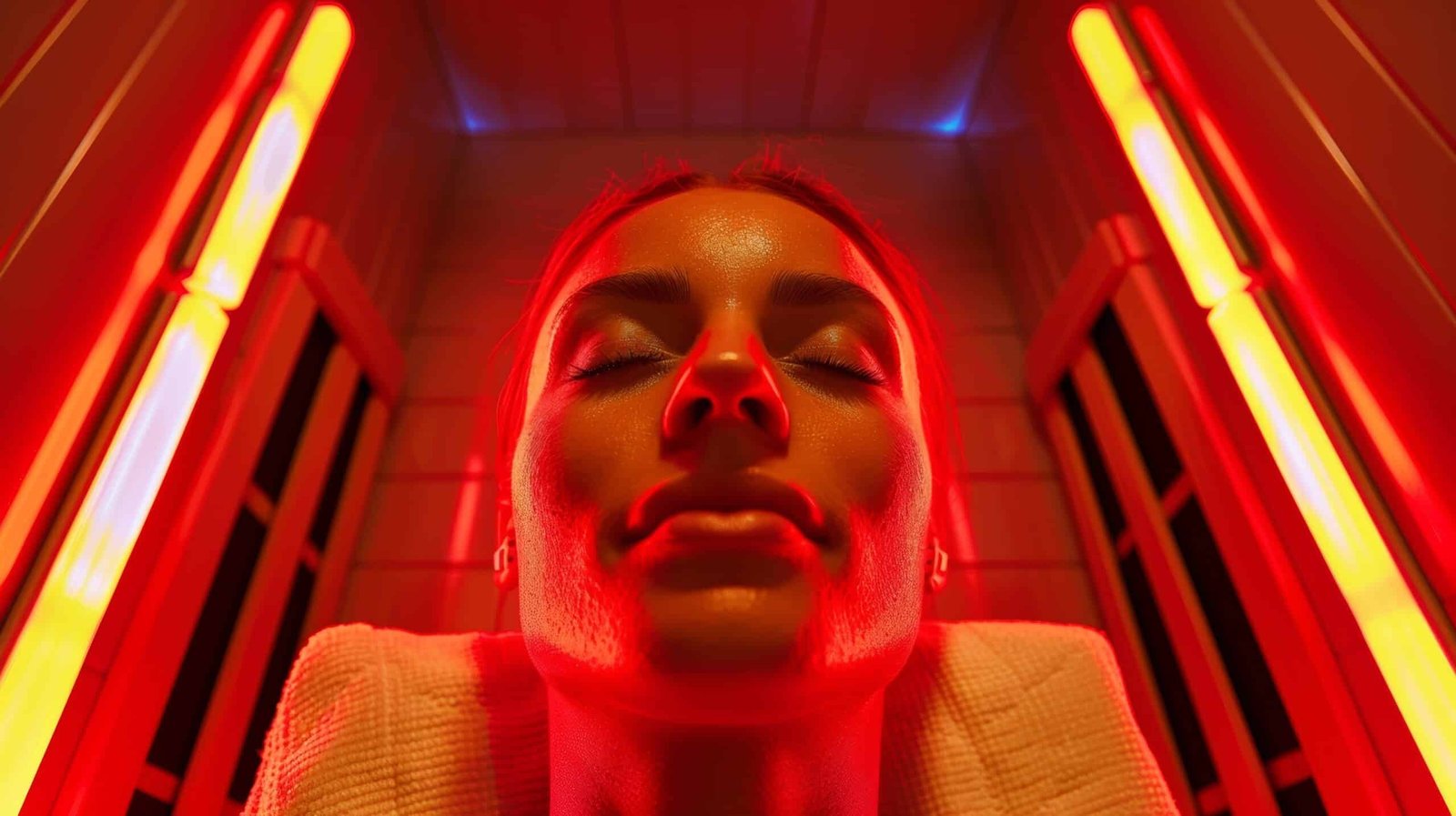
Red light therapy — also called photobiomodulation (PBM) or low-level laser therapy (LLLT) — uses specific wavelengths of red and near-infrared light to produce biological effects in cells and tissues. It’s moved from niche biohacking into mainstream wellness over the past decade, backed by a growing body of peer-reviewed research.
For stress and anxiety specifically, the evidence is still emerging — but the mechanisms are plausible, several studies are promising, and the safety profile is excellent. This article examines what the research actually shows.
What Is Red Light Therapy?
Red light therapy typically uses light in two wavelength ranges:
- Red light: 620–700 nanometres — penetrates the skin surface and superficial tissues
- Near-infrared (NIR) light: 700–1100 nanometres — penetrates deeper into tissues, including muscle, bone, and brain tissue
The primary target in cells is cytochrome c oxidase — an enzyme in the mitochondrial electron transport chain. When red and NIR light are absorbed by this enzyme, it enhances cellular energy production (ATP synthesis), reduces oxidative stress, and triggers a cascade of beneficial downstream effects.
How Red Light Therapy May Affect the Brain and Nervous System
Mitochondrial Function and Neuroenergy
The brain is the most energy-intensive organ in the body. When mitochondrial function is impaired — by chronic stress, poor sleep, inflammation, or nutritional deficiencies — brain energy production drops. This is directly linked to mood disorders, cognitive fog, and heightened anxiety. A 2016 review in Frontiers in Psychiatry outlined the evidence for mitochondrial dysfunction as a core mechanism in depression and anxiety — and the theoretical basis for photobiomodulation as an intervention.
Transcranial Photobiomodulation (tPBM)
Near-infrared light in the 800–1000nm range can penetrate the skull and reach cortical brain tissue. Transcranial PBM (tPBM) — applying NIR light directly to the scalp — has been shown to increase regional cerebral blood flow, enhance glucose metabolism in neural tissue, and modulate neurotransmitter activity. A 2015 study in Photomedicine and Laser Surgery demonstrated measurable increases in frontal lobe oxygenation following transcranial NIR application, with corresponding improvements in cognitive performance and mood.
Serotonin and Dopamine Modulation
Research published in Photobiomodulation, Photomedicine, and Laser Surgery has shown that red and NIR light exposure influences serotonin and dopamine synthesis and release — key neurotransmitters in mood and anxiety regulation. The proposed mechanism involves light-mediated changes in nitric oxide signalling, which in turn affects neurotransmitter pathways.
HPA Axis and Cortisol
Animal studies have shown that red light therapy can modulate HPA axis activity — the central stress response system that governs cortisol secretion. A 2019 study in Photochemistry and Photobiology demonstrated reduced stress-induced cortisol elevation in animals exposed to low-level laser therapy, suggesting a potential buffering effect on the stress response.
Anti-Inflammatory Effects
Neuroinflammation is increasingly recognised as a driver of anxiety and depression. Red light therapy has consistently demonstrated anti-inflammatory effects across multiple tissue types. A 2012 review in Seminars in Cutaneous Medicine and Surgery documented red light’s capacity to reduce pro-inflammatory cytokines and increase anti-inflammatory mediators — effects that may extend to neural tissue.
Clinical Research on Red Light Therapy and Mood/Anxiety
Depression and Anxiety in Clinical Populations
A 2009 study published in Behavioral and Brain Functions applied transcranial NIR light (810nm) to the forehead of patients with major depressive disorder and anxiety. After four weeks of treatment, participants showed significant reductions in both depression and anxiety scores compared to the sham group — with the most pronounced effects in those with the highest baseline severity.
Transcranial PBM for Depression
A 2018 randomised controlled pilot trial in the Journal of Affective Disorders investigated transcranial PBM in patients with major depressive disorder. Active treatment produced significantly greater reductions in depression scores compared to sham treatment after eight sessions — with response rates that were clinically meaningful for a non-pharmacological intervention.
PTSD and Traumatic Brain Injury
Some of the most consistent data on transcranial PBM and emotional symptoms comes from traumatic brain injury (TBI) research. A 2017 study in Photomedicine and Laser Surgery found that transcranial NIR treatment in veterans with TBI and PTSD significantly reduced PTSD symptoms, anxiety, depression, and sleep disturbance over several months of treatment — with effect sizes that compared favourably to conventional treatments.
Seasonal Affective Disorder
Full-spectrum bright light therapy — the most established phototherapy — has decades of research supporting its use in seasonal affective disorder (SAD). Red and NIR wavelengths represent a subset of this broader spectrum. Research published in the American Journal of Psychiatry has confirmed light therapy’s effectiveness for SAD is comparable to antidepressant medication — with faster onset and fewer side effects.
How to Use Red Light Therapy for Nervous System Support
Device Types
- Full-body panels — large panels (e.g., 300–1500W) used at a distance of 6–24 inches; treat large surface areas; most commonly used for systemic effects and energy
- Targeted devices — smaller panels, handheld devices, or light pads for local treatment
- Transcranial devices — helmets, headsets, or panels positioned at the scalp specifically for brain-directed treatment (810–830nm NIR typically used)
Protocol Guidelines
Based on the research, a reasonable starting protocol for nervous system and mood support:
- Wavelengths: 630–670nm (red) and/or 810–850nm (NIR) for transcranial use
- Session duration: 10–20 minutes per session
- Frequency: Daily or 5x per week
- Distance: 6–12 inches from the device for panels; per manufacturer guidelines for headsets
- Time of day: Morning or early afternoon — avoid evening use as red/NIR light may be mildly stimulating
- Consistency: Allow 4–8 weeks for mood-related benefits to become apparent
Eye Safety
Never look directly into red or NIR light sources without appropriate eye protection. Most consumer devices are safe when used at recommended distances with eyes closed or averted, but direct retinal exposure to high-power devices should be avoided. Transcranial helmets typically include eye protection.
Limitations and Honest Assessment
The evidence for red light therapy specifically for anxiety is still limited. Most of the research has focused on depression, TBI, and pain rather than primary anxiety disorders. The existing anxiety-relevant studies are often small and many lack adequate controls.
What we can say with confidence:
- The cellular mechanisms are well-established and biologically plausible for brain effects
- The safety profile is excellent — no serious adverse effects have been reported in clinical trials at appropriate doses
- The depression data is more consistent than the anxiety data, but the two conditions share overlapping neurobiology
- Red light therapy is best used as a complement to other nervous system practices — not a standalone treatment
Choosing a Quality Device
Device quality varies enormously. Key specifications to evaluate:
- Irradiance (power density): Look for devices delivering 50–200 mW/cm² at the treatment distance — this determines how long you need to treat to reach a therapeutic dose
- Wavelengths: Verify the specific wavelengths — 630–670nm and 830–850nm are most studied; avoid devices that only claim “red light” without specifying nm
- Third-party testing: Reputable brands provide independent lab reports verifying their irradiance claims
- EMF emissions: Better devices have low electromagnetic field output, though evidence on EMF harm at typical levels is limited
How Red Light Fits Into a Broader Anxiety Strategy
Red light therapy works best alongside other evidence-based nervous system practices:
- Vagus nerve stimulation — for direct parasympathetic activation
- Breathwork — immediate HRV improvement
- Cold exposure — complementary mitochondrial and autonomic effects
- Magnesium — supports the anti-inflammatory and nervous system pathways red light also targets
The Bottom Line
Red light therapy is a genuinely interesting intervention for nervous system support — backed by plausible mechanisms and a growing (if still limited) evidence base. The depression and TBI data is more mature than the anxiety-specific data, but the overlap in neurobiology makes the applications directly relevant.
For anyone already managing the fundamentals of sleep, exercise, and stress — red light therapy, used consistently, may offer an additional layer of nervous system support with minimal risk and no pharmaceutical side effects.
💡 Key research: The most thorough overview of transcranial photobiomodulation for psychiatric conditions is the 2009 study by Schiffer et al. in Behavioral and Brain Functions — a useful starting point for the clinical evidence.
Looking for something specific?
Search all our science-backed articles on natural anxiety relief.