
⚠️ Medical Disclaimer: This article is for informational purposes only and does not constitute medical advice. Always consult a qualified healthcare provider for concerns about your mental or physical health.
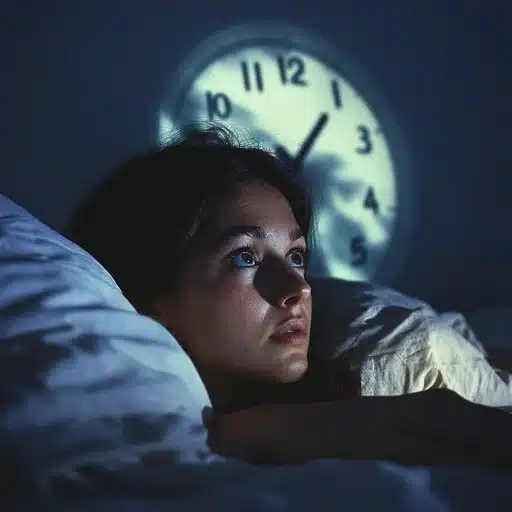
If your anxiety reliably gets worse at night — when the lights go out, the house goes quiet, and your mind suddenly becomes impossible to slow down — you are not imagining it, and you are not alone. Nighttime anxiety is one of the most consistently reported features of anxiety disorders, and it has clear physiological and psychological explanations.
Understanding why it happens is the first step toward breaking the pattern.
Why Anxiety Spikes at Night: The Core Reasons
1. Cortisol Drops in the Evening — But Dysregulation Changes This
In a healthy circadian rhythm, cortisol follows a predictable pattern: it peaks in the morning (the cortisol awakening response), gradually declines through the day, and reaches its lowest point in the middle of the night. This evening cortisol drop is part of what allows the body to wind down for sleep.
But in people with chronic stress or anxiety, this rhythm is often dysregulated. Research published in the Journal of Alternative and Complementary Medicine (2004) documented abnormal cortisol patterns in chronically stressed individuals — including elevated evening cortisol — which directly interferes with sleep onset and fuels nighttime anxious arousal.
Some people with anxiety actually show a cortisol rebound in the late evening — a second smaller peak that coincides with the exact time their anxiety worsens. This is a genuine hormonal phenomenon, not a psychological weakness.
2. No More Distractions
During the day, the demands of work, responsibilities, and social interaction occupy cognitive and attentional resources that would otherwise be directed inward. Anxiety exists during the day too — but it has competition. At night, that competition disappears.
The quiet of nighttime removes all the external input that was keeping worry at bay. The default mode network — the brain’s resting-state network, associated with self-referential thought and rumination — becomes dominant. Research on the default mode network published in PNAS (2009) found that this network is hyperactive in people with anxiety and depression — and most active precisely when there is no task to engage with, making quiet nighttime environments particularly fertile ground for anxious rumination.
3. The Anticipatory Anxiety of Sleep Itself
For many people with anxiety — particularly those who have experienced sleep difficulties — bedtime becomes associated with the negative experiences of lying awake, ruminating, and failing to sleep. Through a classical conditioning process, the bedroom environment itself becomes a trigger for anxiety. Research on sleep-related conditioned arousal published in Sleep Medicine Reviews (2009) identified this conditioned hyperarousal as a primary mechanism in chronic insomnia — and a major driver of nighttime anxiety specifically.
4. Body Temperature and Arousal
Core body temperature naturally drops in the evening as part of the circadian sleep preparation. This cooling is part of what induces sleepiness. But in people with anxiety, sympathetic nervous system overactivation can interfere with this process — maintaining elevated body temperature and metabolic arousal at a time when the body should be cooling down. This physiological mismatch produces restlessness, an inability to settle, and heightened sensitivity to stimuli.
5. Melatonin Suppression
Melatonin — produced by the pineal gland in response to darkness — promotes sleep and has mild anxiolytic effects. In people with dysregulated circadian rhythms, melatonin production may be delayed, reduced, or suppressed by evening light exposure (particularly blue light from screens). Research in PNAS (2014) found that evening exposure to light-emitting devices delayed melatonin onset by 1.5 hours and significantly increased pre-sleep alertness — directly prolonging the window of anxious wakefulness.
6. Hypnic Jerks and Hypervigilance
As the body transitions from wakefulness to sleep, brief muscle twitches called hypnic jerks are normal. In people with heightened anxiety and hypervigilance, these normal physiological events are perceived as alarming — triggering a startle response that re-activates arousal just as sleep was approaching. This pattern is particularly common in people with high anxiety sensitivity.
The Nighttime Anxiety-Insomnia Cycle
Nighttime anxiety and insomnia feed each other in a well-documented cycle:
- Anxiety prevents sleep onset
- Lying awake increases frustration and worry about not sleeping
- Sleep deprivation reduces emotional regulation capacity the next day
- Reduced regulation makes anxiety worse during the day
- Worse daytime anxiety means higher nighttime anxiety
- The cycle repeats and deepens
A 2013 study in Sleep tracked this bidirectional relationship longitudinally and found that anxiety and insomnia mutually predicted each other over time — with neither clearly “causing” the other. Breaking the cycle requires addressing both simultaneously.
Evidence-Based Strategies for Nighttime Anxiety
1. Consistent Sleep and Wake Times
The most powerful single intervention for circadian regulation is maintaining a consistent wake time — even on weekends, even after a bad night’s sleep. This anchors the circadian rhythm and gradually normalises the cortisol and melatonin patterns that drive nighttime anxiety. Sleep restriction therapy — deliberately limiting time in bed until sleep efficiency improves — is a core component of CBT-I (cognitive behavioural therapy for insomnia) and has strong evidence behind it.
2. Morning Light Exposure
Getting bright outdoor light within 30–60 minutes of waking sets the circadian clock and, crucially, determines when melatonin will rise in the evening. Morning light exposure is the most reliable way to ensure melatonin is produced at the right time — making the evening transition to sleep smoother. See our sunlight and mental health guide.
3. Scheduled Worry Time
A randomised trial published in Behaviour Research and Therapy (1994) found that deliberately postponing worry to a scheduled 30-minute “worry window” earlier in the day significantly reduced nighttime rumination and insomnia. When a worry arises at night, write it down and commit to addressing it during the next day’s worry window. This interrupts the rumination without suppressing the concern.
4. The 4-7-8 Breathing Technique
Slow, extended exhalation activates the parasympathetic nervous system and directly counteracts the sympathetic arousal driving nighttime anxiety. The 4-7-8 technique (inhale for 4 counts, hold for 7, exhale for 8) is particularly effective at bedtime because the extended exhale maximises vagal activation. Research in Applied Psychophysiology and Biofeedback confirmed that extended exhalation produces the largest acute improvements in parasympathetic tone. See our full breathing guide.
5. Progressive Muscle Relaxation at Bedtime
A 2016 meta-analysis in PLOS ONE found progressive muscle relaxation (PMR) significantly reduced anxiety and improved sleep quality across multiple studies. Systematically tensing and releasing each muscle group from feet to head discharges accumulated muscular tension from the day and shifts the nervous system toward the parasympathetic state needed for sleep.
6. Magnesium Glycinate Before Bed
Magnesium supports both GABAergic calming and melatonin synthesis, making it particularly useful for nighttime anxiety. A 2012 randomised trial in Magnesium Research found that magnesium supplementation improved subjective sleep quality, sleep efficiency, and morning cortisol in elderly subjects with insomnia. Taking 200–400mg of magnesium glycinate 1–2 hours before bed is a well-tolerated and evidence-informed approach. Read our magnesium guide.
7. Reducing Evening Light and Screen Exposure
Bright light and blue-wavelength light from screens suppress melatonin and maintain alertness when the body should be winding down. Using blue-light filtering (Night Shift, f.lux, or blue-blocking glasses) after 8pm, dimming household lights, and avoiding screens for 30–60 minutes before bed significantly improves melatonin onset and reduces pre-sleep anxiety.
8. Stimulus Control
Stimulus control therapy — a core CBT-I technique — involves using the bed only for sleep and sex (not reading, watching TV, or worrying). If you can’t sleep after 20 minutes, you get up and do something calm in dim light until sleepy. This breaks the conditioned association between the bed and wakefulness, and is one of the most evidence-backed insomnia interventions available. A Cochrane review confirmed stimulus control therapy as among the most effective non-pharmacological insomnia treatments.
9. L-Theanine
200mg of L-theanine at bedtime promotes alpha brain wave activity and reduces the physiological arousal that prevents sleep onset — without causing sedation or grogginess. The 2019 Nutrients RCT specifically documented improvements in sleep quality alongside anxiety reduction. Read our L-theanine guide.
What Not to Do
- Don’t lie in bed trying to force sleep — this increases arousal and conditions the bed as a place of wakefulness
- Don’t check the clock repeatedly — clock-watching amplifies anxiety about time lost and makes sleep harder
- Don’t use alcohol to “take the edge off” — alcohol fragments sleep architecture, suppresses REM sleep, and rebounds with increased anxiety in the second half of the night
- Don’t scroll your phone — blue light suppresses melatonin, and social media and news content activates the amygdala
The Bottom Line
Nighttime anxiety worsening is not a character flaw or a sign of weakness. It is the predictable result of cortisol dysregulation, circadian rhythm disruption, absence of daytime distraction, conditioned arousal, and default mode network dominance — all operating simultaneously in the quiet of night.
The good news: every one of these mechanisms responds to intervention. With consistent application of the strategies above, most people see meaningful improvement in nighttime anxiety within 2–4 weeks.
💡 Key resource: For persistent sleep difficulties alongside anxiety, CBT-I (Cognitive Behavioural Therapy for Insomnia) has the strongest long-term evidence of any insomnia treatment. The Sleep Foundation’s CBT-I overview is a useful starting point.
❓ Frequently Asked Questions
Why does anxiety get worse at night?
Nighttime anxiety worsens because the distractions of the day fall away, leaving the mind free to ruminate. Cortisol also has a natural late-night dip that can create a sense of low energy or vulnerability. For people with anxiety, the quiet of the night amplifies intrusive thoughts and worry loops.
How do I stop nighttime anxiety?
Effective strategies for nighttime anxiety include establishing a consistent wind-down routine (starting 60–90 minutes before bed), practicing slow breathwork in bed, avoiding screens and news before sleep, progressive muscle relaxation, journaling worry thoughts before bed (externalizing them reduces rumination), and keeping the bedroom cool, dark, and quiet.
What supplements help with anxiety at night?
Magnesium glycinate is the most commonly recommended supplement for nighttime anxiety — it supports GABA activity and promotes muscle relaxation. L-theanine (100–200 mg) promotes relaxed alertness without sedation. Ashwagandha reduces cortisol and can improve sleep onset. Always consult a healthcare provider before starting supplements.
Why do I wake up anxious in the middle of the night?
Middle-of-the-night anxiety is often linked to the natural 1–3 AM light-sleep window, where elevated cortisol and reduced deep sleep create vulnerability to waking. In anxious people, the moment of surfacing triggers rumination and a sympathetic nervous system response that makes return to sleep difficult.
Can CBT help with nighttime anxiety?
Yes. Cognitive Behavioral Therapy for Insomnia (CBT-I) is the gold-standard treatment for anxiety-related sleep disruption. It addresses both the cognitive patterns (catastrophic thinking about sleep) and behavioral patterns (irregular schedules, excessive time in bed) that perpetuate nighttime anxiety. It outperforms sleep medication in long-term outcomes.
Looking for something specific?
Search all our science-backed articles on natural anxiety relief.