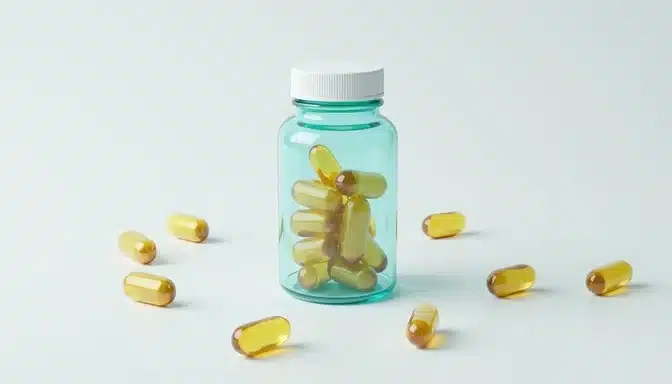

⚕️ Medical Disclaimer: This article is for informational and educational purposes only and does not constitute medical advice. The supplements discussed here are not intended to diagnose, treat, cure, or prevent any disease or medical condition. Always consult a qualified healthcare provider before beginning any new supplement regimen, especially if you are taking medications or have an existing health condition.
🔗 Affiliate Disclosure: This article may contain affiliate links. We may earn a small commission if you purchase through our links, at no extra cost to you.
Tocotrienols for Anxiety: What the Research Says About This Overlooked Form of Vitamin E and Your Stress Response
If you’ve been searching for a natural approach to supporting a calmer nervous system, tocotrienols — a lesser-known but scientifically compelling form of vitamin E — may deserve a serious look. While most people have heard of standard vitamin E (tocopherols), the tocotrienol fraction of the vitamin E family has quietly accumulated a body of research suggesting it may support brain health, modulate neuroinflammation, and help buffer the physiological effects of chronic stress in ways that tocopherols simply cannot.
Vitamin E exists in eight distinct forms: four tocopherols and four tocotrienols (alpha, beta, gamma, and delta). The tocotrienol forms are far less abundant in the Western diet and have historically been overshadowed by alpha-tocopherol in supplement research. But that’s changing fast. For a broader look at how nutritional compounds intersect with anxiety biology, the Supplements & Nutrition hub at StopAnxiety.org is a great place to explore the full landscape of evidence-based options.
In this article, I want to walk you through what the current science says about tocotrienols specifically in the context of stress, mood, and neurological resilience — and why this under-the-radar nutrient may be worth adding to your natural anxiety-support toolkit.
🌿 What Are Tocotrienols and How Are They Different?
Tocotrienols share a basic chemical backbone with tocopherols but have an unsaturated side chain with three double bonds, compared to the fully saturated side chain of tocopherols. This structural difference sounds like chemistry-class trivia, but it has profound biological consequences. The unsaturated tail allows tocotrienols to move more rapidly through cell membranes and penetrate neural tissue with greater efficiency than alpha-tocopherol.
The richest dietary sources of tocotrienols include:
- Palm fruit oil (sustainably sourced) — one of the most concentrated natural sources
- Annatto seeds — uniquely rich in delta- and gamma-tocotrienols with virtually no tocopherols
- Rice bran oil — contains a mixed tocotrienol/tocopherol profile
- Barley and oats — modest tocotrienol content
Standard vitamin E supplements on pharmacy shelves almost universally contain only alpha-tocopherol. Research has shown that high doses of alpha-tocopherol can actually compete with tocotrienols for absorption, which is one reason researchers now recommend choosing tocotrienol supplements that are either tocopherol-free or very low in alpha-tocopherol content.
🧠 The Brain-Protective Angle: Neuroprotection and Neuroinflammation
The connection between chronic neuroinflammation and anxiety disorders is one of the most active areas of psychiatric research today. Studies have consistently found elevated inflammatory markers — including interleukin-6 (IL-6), tumor necrosis factor-alpha (TNF-α), and C-reactive protein — in individuals experiencing chronic anxiety and stress. This inflammatory signaling isn’t just a byproduct; emerging evidence suggests it may actively disrupt GABA receptor sensitivity and serotonin metabolism.
Tocotrienols, particularly the delta and gamma forms, have demonstrated meaningful anti-neuroinflammatory activity in preclinical research. A 2012 study published in the Journal of Nutritional Biochemistry found that tocotrienols suppressed NF-κB signaling — a master regulator of inflammatory gene expression — more potently than alpha-tocopherol in neural tissue models. NF-κB overactivation has been linked to anxiety-like behaviors in multiple animal models.
Additionally, tocotrienols are being studied for their ability to protect neurons from glutamate-induced excitotoxicity — the overstimulation of neurons by excess glutamate that has been associated with heightened anxiety states and stress sensitization. For those interested in how glutamate and GABA balance affects anxiety, our article on GABA-related nutritional support covers this neurochemical seesaw in detail.
🔬 What the Human Research Says
Preclinical findings are promising, but what about human trials? The human research on tocotrienols and psychological stress is still emerging, but several studies offer genuinely interesting signals.
💡 The Malaysian Tocotrienol Stress Study
A randomized, double-blind, placebo-controlled trial conducted in Malaysia examined the effects of mixed tocotrienol supplementation (200mg daily from palm fruit extract) on oxidative stress and psychological wellbeing markers in healthy adults under occupational stress. Participants receiving tocotrienols showed significantly improved scores on perceived stress and fatigue measures compared to placebo after eight weeks. The researchers attributed part of this effect to tocotrienols’ ability to lower lipid peroxidation in the brain, reducing oxidative “noise” that can amplify the nervous system’s threat-detection circuitry.
🔬 Tocotrienols and the HPA Axis
The hypothalamic-pituitary-adrenal (HPA) axis — the central stress-response system that governs cortisol release — appears to be modulated by vitamin E status. A 2015 animal study in Nutrients demonstrated that tocotrienol-rich fraction supplementation was associated with attenuated corticosterone (the rodent equivalent of cortisol) responses to repeated restraint stress, suggesting a possible buffering effect on HPA axis hyperreactivity. While animal-to-human translation always requires caution, this mechanism aligns with broader research showing that oxidative stress amplifies HPA axis dysregulation.
💊 Cognitive Stress and the Annatto Advantage
Annatto-derived tocotrienols, which are uniquely free of tocopherols and particularly rich in delta-tocotrienol, have attracted attention for cognitive resilience under stress. A pilot human study found that annatto tocotrienol supplementation at 125–250mg daily was associated with improved scores on cognitive performance tasks under simulated stress conditions. Delta-tocotrienol in particular appears to cross the blood-brain barrier more readily than other forms, making annatto-derived products a compelling focus for researchers interested in neurological applications.
❤️ Tocotrienols and Cardiovascular Stress Resilience
The anxiety-cardiovascular connection is well-established: chronic anxiety accelerates cardiovascular risk, partly through sustained sympathetic nervous system activation. Tocotrienols have a robust body of research supporting cardiovascular health, including arterial flexibility, healthy cholesterol metabolism, and endothelial function. From a whole-body stress resilience perspective, this cardiovascular support may indirectly support a more stable, less reactive autonomic nervous system — the same system that governs the fight-or-flight response central to anxiety. You can explore how the autonomic nervous system ties into anxiety more deeply in our Understanding Anxiety section.

✅ How to Use Tocotrienols: Practical Guidance
🌿 Dosage Ranges Used in Research
Most human studies have used tocotrienol doses in the range of 100mg to 400mg daily, with the sweet spot for neuroprotective and stress-related outcomes appearing to cluster around 200mg daily of a mixed or annatto-derived tocotrienol product. Higher doses (300–400mg) have been studied for cardiovascular applications. Starting at the lower end and assessing tolerance over 4–6 weeks is a sensible approach.
💡 Timing and Absorption Tips
Tocotrienols are fat-soluble, which means absorption is significantly enhanced when taken with a meal containing healthy fats. Taking your supplement alongside avocado, olive oil, nuts, or a fatty fish meal can meaningfully increase bioavailability. Some research suggests splitting the dose — morning and evening — may provide more consistent plasma levels throughout the day.
⚠️ Important Caution: Avoid High-Dose Alpha-Tocopherol
As noted above, high doses of supplemental alpha-tocopherol (above 100 IU) can compete with tocotrienols for absorption and cellular uptake. If you are currently taking a standard vitamin E supplement, switching to a tocotrienol-only or annatto-derived product — and discontinuing high-dose tocopherol — is generally recommended by researchers in this field. Always discuss any supplement changes with your healthcare provider, especially if you are on blood-thinning medications, as vitamin E compounds can have mild anticoagulant effects.
😴 The Sleep-Stress Connection Worth Noting
One underappreciated area of tocotrienol research involves sleep quality under stress. Oxidative stress is a well-documented disruptor of sleep architecture, particularly REM sleep, which is critical for emotional processing and anxiety regulation. Because tocotrienols are potent lipid-phase antioxidants — protecting the fatty membranes of neurons from oxidative damage — some researchers hypothesize that sustained tocotrienol supplementation may support better sleep quality in individuals whose sleep is being disrupted by stress-driven oxidative burden. This is an active area for future human trials. For more on the sleep-anxiety relationship, see our Sleep & Anxiety resource hub.
🌿 Tocotrienols in Context: Part of a Broader Strategy
No single nutrient is a complete answer to anxiety. Tocotrienols are best understood as one sophisticated piece of a broader nutritional and lifestyle strategy — particularly well-suited for individuals dealing with chronic stress, oxidative load, and inflammatory underpinnings of mood disruption. They pair logically with other neuroprotective compounds such as phosphatidylserine, magnesium glycinate, and adaptogenic herbs that modulate the HPA axis.
What makes tocotrienols stand out in this space is the specificity of their mechanism: they go where standard vitamin E cannot, penetrate neural membranes more efficiently, and appear to quiet neuroinflammatory signaling that may be silently amplifying stress reactivity. For a nutrient that most people have never heard of, that’s a compelling profile.
📚 Also on StopAnxiety.org
This article is for informational purposes only. These statements have not been evaluated by the FDA. These products are not intended to diagnose, treat, cure, or prevent any disease. Always consult your healthcare provider before starting any new supplement or health regimen.
IMAGE_HEADLINE: Tocotrienols
IMAGE_SUBHEADLINE: The Overlooked Vitamin E Form
IMAGE_SUBJECT: tocotrienol softgel capsules with annatto seeds
IMAGE_PALETTE: sage-whisper
IMAGE_PHOTOGRAPHY: Amber softgel capsules spilled gently from a brown glass supplement bottle onto a warm linen surface, a small cluster of dried annatto seeds beside them, a single fresh green leaf for botanical context, shallow depth of field with soft diffused natural window light, styled on aged white wood with a clean minimalist editorial feel
IMAGE_BODY: Tocotrienols are a little-known form of Vitamin E found in annatto seeds and palm fruit. Research suggests they may support brain health and help buffer the body’s response to chronic stress more effectively than standard vitamin E forms. Max 280 characters.
IMAGE_CALLOUTS: flask :: Penetrates Neural
Looking for something specific?
Search all our science-backed articles on natural anxiety relief.