⚠️ Medical Disclaimer: This article is for informational purposes only and does not constitute medical advice. Always consult a qualified healthcare provider before starting any herbal supplement, especially if you take medications or have a medical condition. Herbs can interact with prescription drugs.
If you’ve ever stood in the supplement aisle staring at a wall of herbal anxiety remedies, you know the problem: dozens of options, bold claims on every bottle, and no clear way to tell which ones actually work.
This ranking cuts through the noise. Every herb on this list has been evaluated in human clinical trials — not just test tubes or animal studies. They’re ranked by the quality and consistency of that evidence: number of randomized controlled trials (RCTs), whether findings hold up across multiple studies, effect sizes compared to placebo, and safety profile.
🔬 How We Ranked These Herbs
Each herb was evaluated on four criteria: volume of evidence (how many RCTs and meta-analyses exist), effect size (how much anxiety decreased vs. placebo), active comparators (whether the herb was tested head-to-head against pharmaceutical anxiolytics), and safety profile. The primary outcome measure used across most studies is the Hamilton Anxiety Rating Scale (HAM-A), allowing meaningful comparisons between studies.
🥇 #1 — Lavender (Silexan): The Benchmark
No herb for anxiety has more rigorous clinical backing than lavender — specifically the oral lavender oil preparation known as Silexan (80–160 mg/day).
The landmark evidence: a randomized double-blind trial published in Phytomedicine found Silexan reduced HAM-A scores by 45% — statistically comparable to lorazepam (Ativan), a prescription benzodiazepine. A subsequent large RCT with 539 participants compared Silexan at 80 mg and 160 mg to paroxetine (Paxil) and placebo. Both Silexan doses were superior to placebo, and the 160 mg dose outperformed paroxetine on anxiety reduction.
A 2023 meta-analysis of five placebo-controlled trials confirmed consistent anxiolytic effects across subthreshold anxiety, mixed anxiety-depression disorder (MADD), and full GAD. Effects became detectable within two weeks. Critically, Silexan shows no sedative effects and no addiction potential — two major advantages over benzodiazepines.
🧠 Mechanism: Linalool and linalyl acetate act on GABA-A receptors and voltage-gated calcium channels, calming overactive neural circuits without CNS depression.
💊 Best form: Oral Silexan capsules (80–160 mg) for clinical results. Aromatherapy has evidence for acute anxiety reduction but is weaker overall.
⚠️ Caution: Avoid topical use on boys before puberty (possible hormonal effects). Discuss with your doctor if taking CNS medications.
🥈 #2 — Kava (Piper methysticum): Most Potent Acute Anxiolytic
Kava has the largest body of clinical trial data of any anxiolytic herb, with over 50 published human trials. A Cochrane systematic review of 11 RCTs involving 645 participants concluded kava is a safe and effective short-term treatment for anxiety. A pivotal 8-week double-blind RCT with 129 patients with GAD found kava equivalent to buspirone and opipramol (standard prescription anxiolytics).
🧠 Mechanism: Kavalactones enhance GABA-A receptor activity, inhibit noradrenaline reuptake, and block sodium/calcium ion channels — a multi-target anxiolytic action.
📊 Why it ranks #2 despite extensive evidence: Liver toxicity concerns. Over 100 cases of hepatotoxicity have been reported, though experts debate causation (co-use of alcohol or drugs, poor-quality extracts, incorrect plant parts). Ranked below lavender because lavender’s safety profile is cleaner.
💊 Best form: Water-extracted kava (traditional Pacific preparation) from noble kava cultivars. Avoid acetone or alcohol extracts.
⚠️ Caution: Do not combine with alcohol, benzodiazepines, or liver-processed medications. Regular liver function monitoring recommended for long-term users. Not for those with liver disease.
🥉 #3 — Ashwagandha (Withania somnifera): Best for Stress-Driven Anxiety
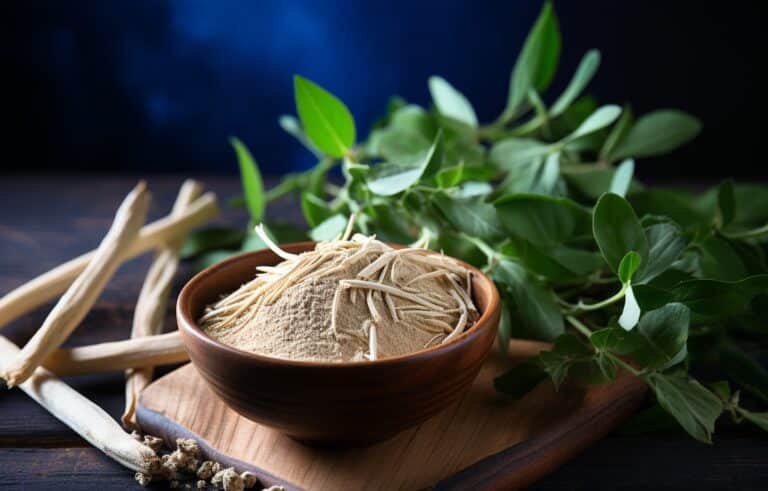
Ashwagandha is the most studied adaptogen for anxiety and stress. If your anxiety is rooted in chronic stress and elevated cortisol, it may be the most effective herb on this list for your specific situation.
Multiple RCTs consistently show significant reductions in perceived stress and anxiety. A 2019 double-blind placebo-controlled trial found 240 mg/day for 60 days significantly reduced anxiety in adults with mild to moderate anxiety. A 2024 meta-analysis confirmed beneficial effects on both anxiety and stress with a favorable safety profile. A 2022 network meta-analysis ranked ashwagandha among the most efficacious herbs for anxiety by HAM-A scores (mean difference -4.90 vs. placebo).
🧠 Mechanism: Withanolides suppress the HPA axis stress response, lower cortisol, and modulate GABA and serotonin receptor activity. It reduces the biological stress response, not just the subjective feeling of it.
💊 Best form: KSM-66 or Sensoril standardized extracts (5% withanolides), 300–600 mg/day. Takes 4–8 weeks for full effect.
⚠️ Caution: Avoid in pregnancy. Denmark has issued a precautionary ban due to possible thyroid and hormonal effects with long-term use. See our full ashwagandha for anxiety guide.
4️⃣ #4 — Passionflower (Passiflora incarnata): Clinical Performance Exceeds Its Fame
Passionflower is frequently underrated, but its clinical evidence is impressive — especially in head-to-head trials against pharmaceuticals.
A landmark RCT published in the Journal of Clinical Pharmacy and Therapeutics compared passionflower extract to oxazepam (a benzodiazepine) in 36 GAD patients. Both produced equivalent anxiety reductions on HAM-A, but passionflower caused significantly less impairment of job performance. Another trial found passionflower equivalent to midazolam for pre-surgical anxiety. A 2022 network meta-analysis found a mean HAM-A reduction of -4.20 vs. placebo — approaching significance, limited mainly by the smaller number of available trials, not by weak effect.
🧠 Mechanism: Chrysin and other flavonoids bind to GABA-A benzodiazepine receptor sites, producing calming effects without full benzodiazepine receptor agonism. Also modulates serotonin pathways.
💊 Best form: Standardized Passiflora incarnata extract. Often combined with valerian and hops, with separate RCT evidence for these combinations.
⚠️ Caution: Avoid during pregnancy. Can cause drowsiness. Do not combine with benzodiazepines or sedatives.
5️⃣ #5 — Chamomile (Matricaria chamomilla): Best Long-Term Option for GAD
Chamomile tea is so common it’s easy to dismiss. The clinical data tells a different story.
A high-quality 2016 RCT enrolled 93 patients diagnosed with GAD in a randomized double-blind placebo-controlled maintenance trial. After a 12-week acute treatment phase with 1,500 mg/day chamomile extract, patients who continued chamomile through a 26-week follow-up period had significantly lower relapse rates than those switched to placebo. This makes chamomile one of the only herbs with evidence for sustained long-term anxiety management, not just acute relief.
🧠 Mechanism: Apigenin, chamomile’s primary active flavonoid, binds to GABA-A benzodiazepine receptors. It also has mild MAO-inhibitory and serotonin-modulatory activity.
💊 Best form: Standardized extract (1.2% apigenin), 220–1,500 mg/day. Tea has much lower concentrations but is effective for mild anxiety.
⚠️ Caution: Ragweed allergy cross-reactivity possible. Mild blood-thinning effects — caution with anticoagulants.
6️⃣ #6 — Lemon Balm (Melissa officinalis): Fast-Acting Calm
Lemon balm is notable for speed. Unlike adaptogens that take weeks to build up, lemon balm has demonstrated measurable anxiolytic effects within 1–3 hours of a single dose.
A double-blind crossover study found 1.8 g of lemon balm (standardized to 2% rosmarinic acid) significantly improved calmness and reduced anxiety at both 1-hour and 3-hour assessments. A separate 8-week RCT in cardiac patients found 3 g/day reduced anxiety, stress, and sleep disturbance more than placebo. A 2022 review in Current Psychiatry Reports cited lemon balm alongside kava, lavender, and passionflower as having sufficient evidence for clinical recommendation.
🧠 Mechanism: Rosmarinic acid inhibits GABA transaminase — the enzyme that breaks down GABA — effectively raising brain GABA levels. Also modulates the cholinergic system, which may explain cognitive benefits alongside anxiety relief.
💊 Best form: Standardized extract (standardized to rosmarinic acid), 300–900 mg. Often combined with valerian for synergistic effects.
⚠️ Caution: May potentiate sedatives. Use caution with thyroid conditions.
7️⃣ #7 — Ginkgo Biloba: Underrated Anxiolytic, Especially for Older Adults
Most people associate Ginkgo with memory. Fewer know it has meaningful clinical evidence for anxiety — and may be particularly valuable for older adults with anxiety.
The 2022 network meta-analysis (Zhang et al.) found Ginkgo produced a mean HAM-A reduction of -4.63 points compared to placebo — one of the larger effect sizes in the analysis, comparable to ashwagandha. Trials used 240–480 mg/day of the standardized EGb 761 extract.
🧠 Mechanism: Improves cerebral blood flow, reduces oxidative stress in neural tissue, and modulates cortisol and norepinephrine — pathways directly relevant to anxiety. Flavonol glycosides and ginkgolides also have mild GABA-modulatory activity.
💊 Best form: EGb 761 standardized extract (24% flavonol glycosides, 6% terpene lactones), 240 mg/day.
⚠️ Caution: Mild blood-thinning effects — do not use with warfarin or aspirin. Rare seizure risk at very high doses.
8️⃣ #8 — Saffron (Crocus sativus): Surprising Dual Antidepressant/Anxiolytic
Saffron’s reputation as an anxiety herb is growing fast, driven by a wave of recent RCTs. While best known for depression, multiple trials show meaningful anxiolytic effects, particularly in anxious-depressive presentations.
The 2022 network meta-analysis found a HAM-A mean difference of -2.71 for saffron vs. placebo, supported by several individual trials. A 2021 RCT found 28 mg/day of saffron extract superior to placebo for both anxiety and depression over 8 weeks.
🧠 Mechanism: Crocin and safranal inhibit serotonin reuptake (similar to SSRIs), modulate dopamine signaling, and reduce neuroinflammation — key drivers of both depression and anxiety.
💊 Best form: Affron or similar standardized extract, 28–30 mg/day. Culinary saffron at supplemental doses has also shown effects in some trials.
⚠️ Caution: Avoid high doses in pregnancy. Caution with antidepressants — potential serotonin pathway overlap.
9️⃣ #9 — Valerian (Valeriana officinalis): Best for Sleep-Driven Anxiety
Valerian’s clinical picture for anxiety alone is mixed — the 2022 network meta-analysis found insufficient pooled evidence to confirm efficacy on HAM-A scores. But this understates its real-world value for a specific pattern: anxiety entangled with poor sleep.
Multiple RCTs show valerian significantly improves sleep quality, sleep latency, and nighttime waking. For people caught in an anxiety-insomnia feedback loop — where poor sleep amplifies anxiety which further disrupts sleep — breaking the sleep side of that cycle is genuinely therapeutic. Valerian also shines in combination: lemon balm + valerian and hops + valerian + passionflower combinations have positive RCT evidence.
🧠 Mechanism: Valerenic acid inhibits GABA breakdown and directly binds to GABA-A receptors involved in sleep regulation. Also has adenosine receptor activity contributing to sedation.
💊 Best form: Standardized extract (0.8% valerenic acid), 300–600 mg taken 30–60 minutes before bed.
⚠️ Caution: Morning drowsiness at higher doses. Do not combine with sedatives, alcohol, or benzodiazepines.
🔟 #10 — Bacopa Monnieri: Best for Anxiety With Cognitive Impairment
Bacopa occupies a unique niche: it’s the only herb on this list with dual clinical evidence for both anxiety reduction and cognitive enhancement — making it particularly relevant for people whose anxiety manifests as brain fog, poor concentration, and memory issues.
RCTs show bacopa (300–450 mg/day standardized to bacosides) reduces anxiety scores while simultaneously improving memory, processing speed, and attention. A 12-week double-blind RCT found significant anxiety reductions alongside cognitive improvements versus placebo in healthy older adults.
🧠 Mechanism: Bacosides A and B enhance synaptic transmission in the hippocampus, modulate serotonin and GABA systems, and reduce oxidative stress in the brain. Anxiolytic and nootropic effects share the same neurochemical foundation.
💊 Best form: Standardized extract (20–55% bacosides), 300–450 mg/day. Takes 8–12 weeks for full cognitive and anxiolytic effects.
⚠️ Caution: GI upset in some users — take with food. May slow gut motility. Not recommended during pregnancy.
📋 Quick-Reference Ranking Table
| Rank | Herb | Best For | Strongest Evidence | Safety |
|---|---|---|---|---|
| 🥇 1 | Lavender (Silexan) | GAD, generalized anxiety | 5+ RCTs, meta-analysis, vs. lorazepam/paroxetine | ✅ Excellent |
| 🥈 2 | Kava | Acute anxiety, GAD | 50+ trials, Cochrane review | ⚠️ Moderate (liver) |
| 🥉 3 | Ashwagandha | Stress-driven anxiety, cortisol | Multiple RCTs, 2024 meta-analysis | ✅ Good |
| 4️⃣ 4 | Passionflower | GAD, benzodiazepine alternative | RCTs vs. oxazepam and midazolam | ✅ Good |
| 5️⃣ 5 | Chamomile | Long-term GAD management | RCT with 26-week maintenance phase | ✅ Excellent |
| 6️⃣ 6 | Lemon Balm | Acute anxiety, fast relief | RCTs with acute dosing outcomes | ✅ Excellent |
| 7️⃣ 7 | Ginkgo Biloba | Anxiety in older adults | RCTs, network meta-analysis | ✅ Good |
| 8️⃣ 8 | Saffron | Anxious depression overlap | Multiple RCTs | ✅ Good |
| 9️⃣ 9 | Valerian | Sleep-anxiety cycle | Sleep RCTs, combination trials | ✅ Good |
| 🔟 10 | Bacopa | Anxiety with cognitive symptoms | Dual-outcome RCTs | ✅ Good |
🎯 How to Choose the Right Herb for Your Anxiety Pattern
The rankings above reflect overall evidence quality, but the right herb for you depends on your specific pattern:
- 😰 Chronic stress and elevated cortisol? Start with ashwagandha.
- 🏥 Diagnosed GAD, want pharmaceutical-grade evidence? Lavender (Silexan) is your benchmark.
- 😴 Anxiety disrupting sleep? Valerian, lemon balm, or passionflower.
- ⚡ Need fast, acute relief? Kava (with medical supervision) or lemon balm.
- 😔 Anxiety alongside low mood? Saffron or ashwagandha.
- 🧠 Brain fog and anxiety together? Bacopa.
Many people also add evidence-based magnesium glycinate and L-theanine as foundational supports — they’re not herbs, but they have strong anxiety evidence and synergize well with several on this list.
🏷️ A Note on Product Quality
One of the most under-discussed issues with herbal supplements is product quality. The clinical trials generating the evidence in this article used standardized extracts with verified concentrations of active compounds. Generic “herb X” capsules from a discount retailer may contain a fraction of what was tested.
Look for products that specify the standardization (e.g., “standardized to 5% withanolides” for ashwagandha, or “EGb 761” for Ginkgo). Third-party testing certifications — NSF, USP, or ConsumerLab verification — add meaningful quality assurance. The FDA does not regulate herbal supplements for efficacy or purity the way it does pharmaceuticals, which makes brand selection genuinely important.
✅ The Bottom Line
The herbal medicine landscape for anxiety is better studied than most people realize. Lavender leads on evidence quality and safety. Kava leads on potency. Ashwagandha leads for stress-driven anxiety. But every herb on this list has earned its ranking through human clinical trials, not just tradition.
None of these replace therapy or medical care for a diagnosed anxiety disorder. But as part of a comprehensive natural approach, several have clinical evidence as strong as some pharmaceuticals — with safety profiles many people find more tolerable.
Start with one, use a quality standardized product, give it 4–8 weeks, and track your response carefully. The evidence is on your side. 🌿
🎁 Want a personalized natural anxiety relief plan? Get our free guide covering the evidence-based tools, supplements, and daily habits that actually move the needle. Download it free here →
Looking for something specific?
Search all our science-backed articles on natural anxiety relief.