⚠️ Medical Disclaimer: This article is for informational purposes only and does not constitute medical advice. Always consult a qualified healthcare provider before starting any supplement.
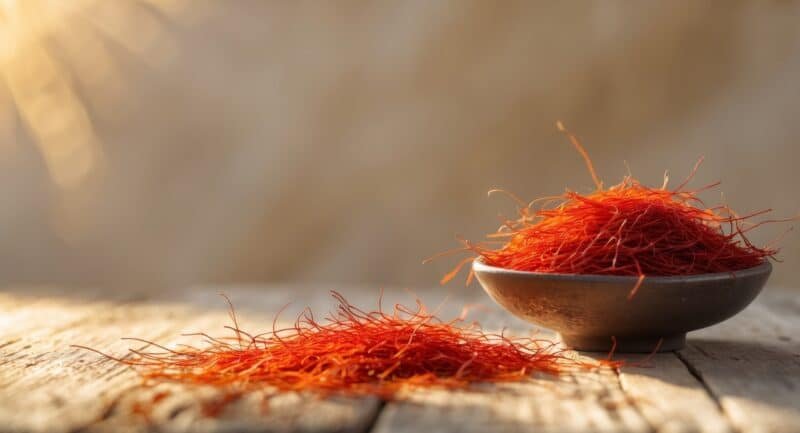
Saffron is best known as the world’s most expensive spice — the vivid crimson stigmas of Crocus sativus, harvested by hand in small quantities each autumn. But beyond its culinary use, saffron has attracted serious scientific attention over the past two decades for something far more unexpected: its effects on mood, anxiety, and depression.
The research is surprisingly robust. Multiple randomised controlled trials have now tested saffron extract against placebo — and in some cases against antidepressant medications — with results that are hard to dismiss.
This article covers what saffron actually does in the brain, what the clinical trials show, appropriate dosing, and important safety considerations.
What Makes Saffron Biologically Active?
The mood-relevant compounds in saffron are primarily found in the stigma (the deep red threads) and, to a lesser extent, the petals. The key active compounds include:
- Crocin — a carotenoid glycoside responsible for saffron’s colour and one of its primary bioactive compounds
- Crocetin — the aglycone form of crocin, which crosses the blood-brain barrier more readily
- Safranal — the volatile compound responsible for saffron’s distinctive aroma, with demonstrated effects on GABA receptors
- Picrocrocin — the bitter-tasting precursor to safranal
Together these compounds appear to influence serotonin, dopamine, and norepinephrine — three of the most important neurotransmitters in mood regulation.
How Saffron Affects the Brain
Serotonin Reuptake Inhibition
Saffron’s crocin and safranal have been shown to inhibit the reuptake of serotonin — the same fundamental mechanism as SSRI antidepressants like fluoxetine and sertraline. A 2004 study in Phytotherapy Research demonstrated this serotonin reuptake inhibition in laboratory models, providing a plausible mechanistic basis for saffron’s antidepressant effects.
GABA Receptor Activity
Safranal has been shown to bind to GABA-A receptors — the same receptors targeted by benzodiazepines and the amino acid GABA itself. Research published in Phytomedicine (2007) found that safranal produced anxiolytic (anti-anxiety) effects in animal models via this GABAergic pathway, at levels comparable to diazepam in some measures.
NMDA Receptor Modulation
Crocetin has shown activity at NMDA receptors — glutamate receptors involved in learning, memory, and mood regulation. Excessive NMDA receptor activation is associated with anxiety and depression, and modulating this system is a target of newer antidepressant research including ketamine.
Anti-Inflammatory and Antioxidant Effects
Inflammation is increasingly recognised as a driver of both anxiety and depression. Crocin and crocetin are potent antioxidants that reduce oxidative stress and inflammatory markers. A 2015 review in the Journal of Integrative Medicine highlighted these anti-inflammatory mechanisms as central to saffron’s mood effects.
What the Clinical Research Shows
Saffron vs Placebo for Depression
Multiple randomised controlled trials have compared saffron extract to placebo in mild-to-moderate depression. A 2005 double-blind trial published in Phytotherapy Research found that 30mg of saffron extract daily for six weeks produced significantly greater reductions in depression scores than placebo — with effect sizes that were clinically meaningful.
Saffron vs Antidepressant Medications
Several trials have directly compared saffron to SSRIs. A 2004 randomised trial in BMC Complementary and Alternative Medicine compared 30mg saffron extract daily to 20mg fluoxetine (Prozac) for six weeks in people with mild-to-moderate depression. Both groups showed equivalent improvements — saffron was non-inferior to the antidepressant, with a significantly better side-effect profile.
A similar trial compared saffron to imipramine (a tricyclic antidepressant) with comparable findings. Published in Phytomedicine (2005), the study found 30mg saffron extract equally effective as 100mg imipramine for mild-to-moderate depression over six weeks.
Saffron for Anxiety
A 2019 randomised controlled trial published in the Journal of Affective Disorders specifically examined saffron’s effects on anxiety in adults with elevated anxiety symptoms. Participants taking 28mg of saffron extract daily for eight weeks showed significantly greater reductions in anxiety scores compared to placebo — with effects apparent from week two onward.
Saffron for PMS-Related Mood Symptoms
A 2008 double-blind randomised trial in BJOG: An International Journal of Obstetrics and Gynaecology found that 30mg saffron extract daily significantly reduced PMS symptoms — including mood changes, irritability, and anxiety — compared to placebo. This is one of the stronger applications for saffron given the consistency of the data.
Systematic Reviews
A 2018 meta-analysis published in the Journal of Integrative Medicine pooled data from multiple saffron trials and concluded that saffron was significantly more effective than placebo for depressive symptoms and showed a favourable safety profile. The authors noted that larger trials were needed but that the existing evidence warranted serious consideration.
Dosage: What the Evidence Supports
Nearly all clinical trials have used standardised saffron extract at 30mg per day, typically split as 15mg twice daily. This is the dose that has demonstrated efficacy and safety across multiple studies.
Some newer products use doses of 28mg to match the formulation used in the 2019 anxiety trial. Either dose falls within the evidence-supported range.
Important dosage notes:
- Effects on mood typically appear within 2–4 weeks of consistent use
- Full benefits may take 6–8 weeks to become apparent
- Higher doses (above 1.5g) are associated with toxicity — do not exceed recommended amounts
- Culinary saffron (the spice) contains far lower concentrations of active compounds than standardised extracts
Safety and Side Effects
At the therapeutic dose of 30mg per day, saffron has an excellent safety profile in clinical trials. Side effects are uncommon and generally mild:
- Mild nausea or appetite changes (most common, usually transient)
- Headache (rare)
- Dry mouth (rare)
Important cautions:
- Pregnancy: Saffron in high doses has uterotonic properties — it can stimulate uterine contractions. It should be avoided during pregnancy at supplemental doses. Culinary amounts in food are generally considered safe.
- Bipolar disorder: As with other mood-active compounds, saffron should be used only under medical supervision in bipolar disorder due to the theoretical risk of triggering hypomania.
- Medications: Saffron may interact with antidepressants (risk of serotonin syndrome at high doses), blood thinners, and blood pressure medications. Always consult your doctor if you are on any prescription medications.
- Allergy: Those with known allergies to Liliaceae plants (tulips, hyacinths) may have cross-reactivity.
Choosing a Quality Saffron Supplement
Saffron is one of the most commonly adulterated spices in the world — and this problem extends to supplements. Key things to look for:
- Standardised extract: Look for products standardised to contain specific levels of crocin or safranal — ideally matching the extracts used in clinical trials (such as affron® or Satiereal®)
- Third-party tested: Choose products verified by NSF, USP, or ConsumerLab
- Clearly labelled source: Iranian and Spanish saffron are the most researched origins
- Reasonable price: Quality saffron extract at 30mg/day should cost $20–50 per month — extremely cheap products may be adulterated
How Saffron Fits Into a Broader Anxiety Strategy
Saffron works well as a targeted supplement for mood and anxiety support, particularly when anxiety has a strong emotional or low-mood component. It pairs well with:
- Magnesium glycinate — for nervous system and sleep support
- L-theanine — for immediate calm without sedation
- Vagus nerve exercises — for underlying nervous system regulation
The Bottom Line
Saffron extract at 30mg per day has a more substantial evidence base than most people realise. Multiple randomised controlled trials have shown it to be superior to placebo for depression and anxiety, and comparable to SSRIs for mild-to-moderate depression — with considerably fewer side effects.
It’s not a replacement for professional mental health care, and it’s not appropriate for severe anxiety or depression without medical guidance. But for mild-to-moderate mood and anxiety symptoms, saffron is one of the best-supported natural options currently available — and one of the most overlooked.
💡 Key research: The most influential overview of saffron’s clinical evidence is the 2018 meta-analysis in the Journal of Integrative Medicine — a good starting point if you want to explore the primary literature.
❓ Frequently Asked Questions
Does saffron help with anxiety?
Yes. Saffron (Crocus sativus) has demonstrated meaningful anti-anxiety and antidepressant effects in multiple clinical trials. Its active compounds — crocin and safranal — appear to inhibit serotonin reuptake and modulate GABA and dopamine activity. A typical studied dose is 30 mg/day of standardized extract.
How long does saffron take to work for anxiety?
Clinical trials typically observe anxiety and mood benefits from saffron after 6–8 weeks of daily supplementation. Some studies report improvements as early as 4 weeks. Saffron works through gradual modulation of neurotransmitter systems rather than immediate sedation.
Is saffron safe as a supplement?
Saffron is generally safe at supplemental doses (15–30 mg/day). Very high doses (above 5 grams) can be toxic, but this far exceeds typical supplement amounts. Saffron may interact with blood thinners and should be used cautiously during pregnancy. Always consult a healthcare provider before starting.
How does saffron compare to antidepressants for anxiety?
Several head-to-head trials have found saffron extract (30 mg/day) to be comparable in efficacy to low-dose SSRIs (fluoxetine and sertraline) for mild-to-moderate depression and anxiety, with fewer side effects. It is not a replacement for prescribed medication in severe anxiety disorders.
What is the best form of saffron supplement to buy?
Look for standardized saffron extracts (standardized to safranal or crocin content) from reputable brands with third-party testing. Common standardized products include those containing affron® or SaffSerene® — trademarked extracts with clinical trials behind them. A dose of 28–30 mg/day of standardized extract is most studied.
Looking for something specific?
Search all our science-backed articles on natural anxiety relief.